Nelson Mandela
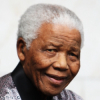
Nelson Mandela
Nelson Rolihlahla Mandelawas a South African anti-apartheid revolutionary, politician, and philanthropist, who served as President of South Africa from 1994 to 1999. He was the country's first black chief executive, and the first elected in a fully representative democratic election. His government focused on dismantling the legacy of apartheid through tackling institutionalised racism and fostering racial reconciliation. Politically an African nationalist and democratic socialist, he served as President of the African National Congressparty from 1991 to 1997...
NationalitySouth African
ProfessionWorld Leader
Date of Birth18 July 1918
CityMvezo, South Africa
The New Year will bring many changes, ... They will depend on our working together to realize our dream.
Then we'd get behind them and drive them up a valley. Then we'd stab a pig, it would cry, and then we'd roast it and eat it.
I told the relatives that he would go to a country trusted by Britain and the United States to serve his full sentence, and the length of the sentence would be determined by the Scottish authorities,
A beautiful and important film about South Africa's Truth and Reconciliation Commission. It will engage and influence not only South Africans, but people all over the world concerned with the great questions of human reconciliation, forgiveness, and tolerance.
It was the government that should have been told to refrain from its inhuman policy of violence and massacre, not the African people .... It was further argued that it is wrong and indefensible for a political Organization to repudiate picketing, whi
As 1999 approaches, I will endeavor as state president to delegate more and more responsibility so as to ensure a smooth transition to the new presidency,
The international community ... also made an important contribution to this struggle, ... not least through the imposition of economic and other sanctions.
The laws that stopped blacks from voting were the worst, because they prevented blacks from voting someone into parliament who could change the other laws. Even though the blacks were the majority of the population, they were still not getting a say.
My time in prison only deepened my resolve against apartheid. Even while I was in prison, I fought against it, teaching my cellmates about white supremacy and how to fight against it.
I told my cellmates about the oppression of the whites and apartheid. I helped organize hunger strikes and the like in my prison.
The message of reconciliation, of nation-building, of granting amnesty, indemnity, has struck a powerful, favorable chord. And people can understand that we're here not for purposes of retribution but to forget the past and to build our country.
Other people have qualities that may be better than your own. Let them express them.
It is important to not be hostile to what a greater part of society has embraced, whether as Christians, Hindus or Muslims. It is important to respect that because whether you believe or not in the existence of a superior being, humanity does believe in that.
The question of education has nothing to do with the question of the vote. On numerous occasions it has been proved in history that people can enjoy the vote even if they have no education.