Nelson Mandela
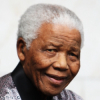
Nelson Mandela
Nelson Rolihlahla Mandelawas a South African anti-apartheid revolutionary, politician, and philanthropist, who served as President of South Africa from 1994 to 1999. He was the country's first black chief executive, and the first elected in a fully representative democratic election. His government focused on dismantling the legacy of apartheid through tackling institutionalised racism and fostering racial reconciliation. Politically an African nationalist and democratic socialist, he served as President of the African National Congressparty from 1991 to 1997...
NationalitySouth African
ProfessionWorld Leader
Date of Birth18 July 1918
CityMvezo, South Africa
We... call for the rigorous implementation of the U.N. Security Council sanctions to oblige UNITA fully to implement the Lusaka peace protocol,
It is a realization of a dream for me to be here to come and pledge my solidarity with my friend Yasser Arafat,
It is an ideal which I hope to live for and to achieve. But if needs be, it is an ideal for which I am prepared to die.
is eager for peace. He is a passionate fighter for peace.
which made us realize that this is an international phenomenon that we celebrate. Rosa Parks is worldwide.
It doesn't do any good to say I won't forgive her, because my child's already gone.
We must act together to bring some credibility to the process,
We owe this to the countless men, women and children across generations who carried this anthem in their hearts, in the face of bullets and the hangman's noose,
The so-called 'Palestinian autonomous areas' are bantustans. These are restricted entities within the power structure of the Israeli apartheid system.
Today the majority of South Africans, black and white, recognize that apartheid has no future. It has to be ended by our own decisive mass action in order to build peace and security. The mass campaign of defiance and other actions of our organizatio
From the beginning, Mandela and Tambo was besieged with clients. We were not the only African lawyers in South Africa, but we were the only firm of African lawyers. For Africans, we were the firm of first choice and last resort.
Sabotage did not involve loss of life, and it offered the best hope for future race relations. Bitterness would be kept to a minimum and, if the policy bore fruit, democratic government could become a reality.
I came across few whites as a boy at Qunu. The local magistrate, of course, was white, as was the nearest shopkeeper. Occasionally, white travelers or policemen passed through our area. These whites appeared as grand as gods to me, and I was aware that they were to be treated with a mixture of fear and respect.
At the outset, I want to say that the suggestion that the struggle in South Africa is under the influence of foreigners or communists is wholly incorrect. I have done whatever I did because of my experience in South Africa and my own proudly felt African background, and not because of what any outsider might have said.