Noam Chomsky
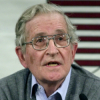
Noam Chomsky
Avram Noam Chomskyis an American linguist, philosopher, cognitive scientist, historian, logician, social critic, and political activist. Sometimes described as "the father of modern linguistics", Chomsky is also a major figure in analytic philosophy, and one of the founders of the field of cognitive science. He has spent more than half a century at the Massachusetts Institute of Technology, where he is Institute Professor Emeritus, and is the author of over 100 books on topics such as linguistics, war, politics, and...
NationalityAmerican
ProfessionTeacher
Date of Birth7 December 1928
CityPhiladelphia, PA
CountryUnited States of America
A basic principal of modern state capitalism is that costs and risks are socialized to the extent possible, while profit is privatized.
A tremendous amount of the entrepreneurial initiative, if you want to call it that, comes from the dynamic state sector on which most of the economy relies to socialize costs and risks and privatize eventual profit. And that's achieved by, if you like, advertising.
The U.S. has the most dysfunctional healthcare system in the industrial world, has about twice the per capita costs, and some of the worst outcomes. It's also the only privatized system.
...dissent, protest, presures of a wide variety that escape elite control can modify the calculus of costs of planners, and offer a slight hope that Washington can be compelled to permit at least some steps towards "justice, freedom and democracy" within its domains.
The free market is 'socialism' for the rich: the public pays the costs and the rich get the benefit - markets for the poor and plenty of state protection for the rich.
A basic principle of modern state capitalism is that costs and risks are socialized to the extent possible, while profit is privatized.
To summarize, draft resistance can make use of the inegalitarian nature of American society as a technique for increasing the cost of American aggression, and it threatens values that are important to those in a decision-making position.
It is pretty ironic that the so-called 'least advanced' people are the ones taking the lead in trying to protect all of us, while the richest and most powerful among us are the ones who are trying to drive the society to destruction.
Language is one component of the human cognitive capacity which happens to be fairly amenable to enquiry. So we know a good deal about that.
Pakistan will never be able to match the Indian militarily, and the effort to do so is taking an immense toll on the society.
Over the years, there have been a series of concepts developed to justify the use of force in international affairs for a long period. It was possible to justify it on the pretext, which usually turned out to have very little substance, that the U.S. was defending itself against the communist menace. By the 1980s, that was wearing pretty thin.
Rendition is just sending people abroad to be tortured.
Remember, weapons of mass destruction don't mean missiles.
There are still thousands of people dying every year in Laos, mostly children and farmers, from unexploded anti-personnel ordnance that the U.S. simply saturated much of the land with, especially in the Plain of Jars. There actually is a British engineering team trying to remove some of these things, which are much worse than land mines.