Noam Chomsky
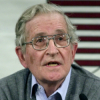
Noam Chomsky
Avram Noam Chomskyis an American linguist, philosopher, cognitive scientist, historian, logician, social critic, and political activist. Sometimes described as "the father of modern linguistics", Chomsky is also a major figure in analytic philosophy, and one of the founders of the field of cognitive science. He has spent more than half a century at the Massachusetts Institute of Technology, where he is Institute Professor Emeritus, and is the author of over 100 books on topics such as linguistics, war, politics, and...
NationalityAmerican
ProfessionTeacher
Date of Birth7 December 1928
CityPhiladelphia, PA
CountryUnited States of America
It is pretty ironic that the so-called 'least advanced' people are the ones taking the lead in trying to protect all of us, while the richest and most powerful among us are the ones who are trying to drive the society to destruction.
There are still thousands of people dying every year in Laos, mostly children and farmers, from unexploded anti-personnel ordnance that the U.S. simply saturated much of the land with, especially in the Plain of Jars. There actually is a British engineering team trying to remove some of these things, which are much worse than land mines.
Terrorists regard themselves as a vanguard. They're trying to mobilize others to their cause. I mean, every specialist on terrorism knows that.
France had a policy, initiated by General de Gaulle, of trying to turn Europe into what was then called a 'third force,' independent of the two superpowers, so Europe should pursue an independent course.
As far as U.S. intelligence knows, Iran is developing nuclear capacities, but they don't know if they are trying to develop nuclear weapons or not. Chances are they're developing what's called 'nuclear capability,' which many states have. That is the ability to have nuclear weapons if they decide to do it. That's not a crime.
The effort to try to present the Social Security program as if it's a major problem, that's just a hidden way of trying to undermine and destroy it.
The ideal is to create a completely fragmented atomized society where everybody is totally alone, doing nothing but trying to pursue created wants, and the wants are created.
The labor movement had been pretty much killed in the 1920s, almost destroyed. It revived in the 1930s and made a huge difference. By the late 1930s the business world was already trying to find ways to beat it back.
If you are giving a graduate course you don't try to impress the students with oratory, you try to challenge them, get them to question you.
The responsibility of the writer as a moral agent is to try to bring the truth about matters of human significance to an audience that can do something about them.
Civil disobedience's main goal typically is to try to arouse and inspire others to join and do something. Well, sometimes that is a good tactic, sometimes not.
The crime of liberation theology was that it takes the Gospels seriously. That's unacceptable. The Gospels are radical pacifist material, if you take a look at them . . . Liberation theology, in Brazil particularly, brought the actual Gospel to peasants. They said, let's read what the Gospels say, and try to act on the principles they describe. That was the major crime that set off the Reagan wars of terror.
Suppose that the US really is trying to get rid of drugs in Colombia. Does Colombia then have the right to fumigate tobacco farms in Kentucky? They are producing a lethal substance far more dangerous than cocaine. More Colombians die from tobacco-related illnesses than Americans die from cocaine. Of course, Colombia has no right to do that.
There are massive efforts on the part of the internet's corporate owners to try to direct it to become a technique of marginalisation and control.