Noam Chomsky
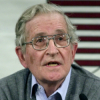
Noam Chomsky
Avram Noam Chomskyis an American linguist, philosopher, cognitive scientist, historian, logician, social critic, and political activist. Sometimes described as "the father of modern linguistics", Chomsky is also a major figure in analytic philosophy, and one of the founders of the field of cognitive science. He has spent more than half a century at the Massachusetts Institute of Technology, where he is Institute Professor Emeritus, and is the author of over 100 books on topics such as linguistics, war, politics, and...
NationalityAmerican
ProfessionTeacher
Date of Birth7 December 1928
CityPhiladelphia, PA
CountryUnited States of America
What the public wants is called 'politically unrealistic.' Translated into English, that means power and privilege are opposed to it.
Nicaragua dealt with the problem of terrorism in exactly the right way. It followed international law and treaty obligations. It collected evidence, brought the evidence to the highest existing tribunal, the International Court of Justice, and received a verdict - which, of course, the U.S. dismissed with contempt.
In the literal sense, there has been no relevant evolution since the trek from Africa. But there has been substantial progress towards higher standards of rights, justice and freedom - along with all too many illustrations of how remote is the goal of a decent society.
I hope that a move toward clemency with Judge Afiuni would be a step towards the importance of maintaining a properly functioning justice system.
...dissent, protest, presures of a wide variety that escape elite control can modify the calculus of costs of planners, and offer a slight hope that Washington can be compelled to permit at least some steps towards "justice, freedom and democracy" within its domains.
I don't bother writing about Fox News. It is too easy. What I talk about are the liberal intellectuals, the ones who portray themselves and perceive themselves as challenging power, as courageous, as standing up for truth and justice. They are basically the guardians of the faith. They set the limits. They tell us how far we can go. They say, 'Look how courageous I am.' But do not go one millimeter beyond that. At least for the educated sectors, they are the most dangerous in supporting power.
I am not too happy with terms like “the left”, to be honest. And I don’t use it much….if by “the left” you mean people who are committed to peace and justice and freedom and so on, there can’t be elements of the left opposed to workers’ movement, at least under that definition.
Why does everyone take for granted that we don't learn to grow arms, but rather, are designed to grow arms? Similarly, we should conclude that in the case of the development of moral systems; there's a biological endowment which in effect requires us to develop a system of moral judgment and a theory of justice, if you like, that in fact has detailed applicability over an enormous range.
Clinton, Kennedy, they all carried out mass murder, but they didn't think that that was what they were doing - nor does Bush. You know, they were defending justice and democracy from greater evils.
It is pretty ironic that the so-called 'least advanced' people are the ones taking the lead in trying to protect all of us, while the richest and most powerful among us are the ones who are trying to drive the society to destruction.
Language is one component of the human cognitive capacity which happens to be fairly amenable to enquiry. So we know a good deal about that.
Pakistan will never be able to match the Indian militarily, and the effort to do so is taking an immense toll on the society.
Over the years, there have been a series of concepts developed to justify the use of force in international affairs for a long period. It was possible to justify it on the pretext, which usually turned out to have very little substance, that the U.S. was defending itself against the communist menace. By the 1980s, that was wearing pretty thin.
Rendition is just sending people abroad to be tortured.