Norman O. Brown
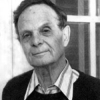
Norman O. Brown
Norman Oliver Brownwas an American scholar, writer, and social philosopher. Beginning as a classical scholar, his later work branched into wide-ranging, erudite, and intellectually sophisticated considerations of history, literature, psychology, culture, and other topics. Brown advanced some novel theses and in his time achieved some general notability...
NationalityAmerican
ProfessionPhilosopher
Date of Birth25 September 1913
CountryUnited States of America
psychology society progress
Psychoanalysis can provide a theory of 'progress,' but only by viewing history as a neurosis.
ideas unhappy progress
Mankind today is still making history without having any conscious idea of what it really wants or under what conditions it would stop being unhappy; in fact what it is doing seems to be making itself more unhappy and calling that unhappiness progress.
truth errors truth-is
Truth is error burned up.
guests world walks
Whoever expects to walk peacefully in the world must be money's guest.
vulnerable vulnerability
To be is to be vulnerable.
currency neurotic
All currency is neurotic currency.
religious money heirs
The money complex is the demonic, and the demonic is God's ape; the money complex is therefore the heir to and substitute for the religious complex, an attempt to find God in things.
fashion humanity survival
Utopian speculations ... must come back into fashion. They are a way of affirming faith in the possibility of solving problems that seem at the moment insoluble. Today even the survival of humanity is a utopian hope.
mad way resisting
Resisting madness is the maddest way of being mad.
essence common-sense long
In its famous paradox, the equation of money and excrement, psychoanalysis becomes the first science to state what common sense and the poets have long known - that the essence of money is in its absolute worthlessness.
history stage commemoration
History is the enactment of ritual on a permanent and universal stage; and its perpetual commemoration.
dynamics enjoyment capitalism
The dynamics of capitalism is postponement of enjoyment to the constantly postponed future.
pay-the-price impossible-things deeds
I perceive a necessary gap between seeing and being. I would not be able to have said certain things if I had been under the obligation to unify the word and the deed. As it is I can let my words reach out and net impossible things - things that are impossible for me to do. And this is a way to pay the price for saying or seeing things.
substance body self-destruction
The human body is not a thing or a substance, given, but a continuous creation.