Oliver Sacks
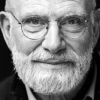
Oliver Sacks
Oliver Wolf Sacks, CBE, FRCPwas a British neurologist, naturalist and author who spent his professional life in the United States. He believed that the brain is the "most incredible thing in the universe" and therefore important to study. He became widely known for writing best-selling case histories about his patients' disorders, with some of his books adapted for stage and film...
NationalityBritish
ProfessionNon-Fiction Author
Date of Birth9 July 1933
cared feeling giving grateful humble mattered pray thanks
Who cared if there was really any Being to pray to? What mattered was the sense of giving thanks and praise, the feeling of a humble and grateful heart.
asked director meet music seems
When the documentary of 'Awakenings' was made in '73, the first thing the film director asked was, 'Could we meet the music therapist? She seems to be the most important person around here,'
active autonomous functional hearing imagery involved parts seeing super
With any hallucinations, if you can do functional brain imagery while they're going on, you will find that the parts of the brain usually involved in seeing or hearing - in perception - have become super active by themselves. And this is an autonomous activity; this does not happen with imagination.
rivers smell lakes
Hydrogen selenide, I decided, was perhaps the worst smell in the world. But hydrogen telluride came close, was also a smell from hell. An up-to-date hell, I decided, would have not just rivers of fiery brimstone, but lakes of boiling selenium and tellurium, too.
firsts patient sickness
First thing about being a patient-you have to learn patience.
health delight patient
I have often seen quite demented patients recognize and respond vividly to paintings and delight in the act of painting at a time when they are scarcely responsive, disoriented, and out of it.
reflection museums drs
Dr. Kertesz mentioned to me a case known to him of a farmer who had developed prosopagnosia and in consequence could no longer distinguish (the faces of) his cows, and of another such patient, an attendant in a Natural History Museum, who mistook his own reflection for the diorama of an ape
doctors stupidity patient
There is among doctors, in acute hospitals at least, a presumption of stupidity in their patients.
voice brain may
It seems that the brain always has to be active, and if the auditory parts of the brain are not getting sufficient input, then they may start to create hallucinatory sounds on their own. Although it is curious that they do not usually create noises or voices; they create music.
memories frozen jars
We now know that memories are not fixed or frozen, like Proust's jars of preserves in a larder, but are transformed, disassembled, reassembled, and recategorized with every act of recollection.
drama simple movement
The power of music, narrative and drama is of the greatest practical and theoretical importance. ... We see how the retarded, unable to perform fairly simple tasks involving perhaps four or five movements or procedures in sequence, can do these perfectly if they work to music.
philosophy philosophical science
Sign language is the equal of speech, lending itself equally to the rigorous and the poetic, to philosophical analysis or to making love.
technology thinking brain
Although I think it is wonderful to have the whole world of music available in something that small and to have it conveyed with such fidelity almost straight into the brain, I think the technology is also a danger.
health people feelings
For 'wellness', naturally, is no cause for complaint - people relish it, they enjoy it, they are at the furthest pole from complaint. People complain of feeling ill - not well ... Thus, though a patient will scarcely complain of being 'very well', they may become suspicious if they feel 'too well'.