Oswald Spengler
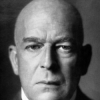
Oswald Spengler
Oswald Arnold Gottfried Spenglerwas a German historian and philosopher of history whose interests included mathematics, science, and art. He is best known for his book The Decline of the West, published in 1918 and 1922, covering all of world history. Spengler's civilization model postulates that any civilization is a superorganism with a limited and predictable lifespan...
NationalityGerman
ProfessionPhilosopher
Date of Birth29 May 1880
CountryGermany
country clever cities
In place of a world, there is a city, a point, in which the whole life of broad regions is collecting while the rest dries up. In place of a type-true people, born of and grown on the soil, there is a new sort of nomad, cohering unstably in fluid masses, the parasitical city dweller, traditionless, utterly matter-of-fact, religionless, clever, unfruitful, deeply contemptuous of the countryman and especially that highest form of countryman, the country gentleman.
believe air creating
And the National Socialists believe that they can afford to ignore the world or oppose it, and build their castles-in-the-air without creating a possibly silent, but very palpable reaction from abroad.
country mean numbers
When the Englishman speaks of national wealth he means the number of millionaires in the country.
art style development
The mathematic, then, is an art. As such it has its styles and style periods. It is not, as the layman and the philosopher (who is in this matter a layman too) imagine, substantially unalterable, but subject like every art to unnoticed changes form epoch to epoch. The development of the great arts ought never to be treated without an (assuredly not unprofitable) side-glance at contemporary mathematics.
school mean leader
To-day a democrat of the old school would demand, not freedom for the press, but freedom from the press; but mean-time the leaders have changed themselves into parvenus who have to secure their position vis-a-vis the masses.
almost best bore city country demanding dies fresh giant midst nourished sucks till waste
Long ago the country bore the country-town and nourished it with her best blood. Now the giant city sucks the country dry, insatiably and incessantly demanding and devouring fresh streams of men, till it wearies and dies in the midst of an almost uninhabited waste of country.
taken mean greatness
We are born into this time and must bravely follow the path to the destined end. There is no other way. Our duty is to hold on to the lost position, without hope, without rescue, like that Roman soldier whose bones were found in front of a door in Pompeii, who, during the eruption of Vesuvius, died at his post because they forgot to relieve him. That is greatness. That is what it means to be a thoroughbred. The honorable end is the one thing that can not be taken from a man.
past links changing-your-life
You are caught in the current of unceasing change. Your life is a ripple in it. Every moment of your conscious life links the infinite past with the infinite future. Take part in both and you will not find the present empty.
men knives soul
Critical (i.e., separating) methods apply only to the world-as-nature. It would be easier to break up a theme of Beethoven with dissecting knife or acid than to break up the soul by methods of abstract thought . Nature-knowledge and man-knowledge have neither ways nor aims in common.
country men long-ago
Long, long ago the country bore the country-town and nourished it with her best blood. Now the giant city sucks the country dry, insatiably and incessantly demanding and devouring fresh streams of men, till it wearies and dies in the midst of an almost uninhabited waste of country.
country land cities
It is the Late city that first defies the land, contradicts Nature in the lines of its silhouette, denies all Nature. It wants to be something different from and higher than Nature. These high-pitched gables, these Baroque cupolas, spires, and pinnacles, neither are, nor desire to be, related with anything in Nature. And then begins the gigantic megalopolis, the city-as-world, which suffers nothing beside itself and sets about annihilating the country picture.
mother successful thinking
At last, in the gray dawn of Civilization the fire in the Soul dies down. The dwindling powers rise to one more, half-successful, effort of creation, and produce the Classicism that is common to all dying Cultures. The soul thinks once again, and in Romanticism looks back piteously to its childhood; then finally, weary, reluctant, cold, it loses its desire to be, and, as in Imperial Rome, wishes itself out of the overlong daylight and back in the darkness of protomysticism in the womb of the mother in the grave.