Ovid
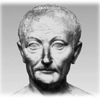
Ovid
Publius Ovidius Naso, known as Ovid in the English-speaking world, was a Roman poet who lived during the reign of Augustus. He was a contemporary of the older Virgil and Horace with whom he is often ranked as one of the three canonical poets of Latin literature. The Imperial scholar Quintilian considered him the last of the Latin love elegists. He enjoyed enormous popularity, but, in one of the mysteries of literary history, he was sent by Augustus into exile...
NationalityRoman
ProfessionPoet
gratitude thanks dues
Thanks are justly due for things got without purchase. [Lat., Gratia pro rebus merito debetur inemtis.]
gossip towns knows
You do not know it but you are the talk of all the town. [Lat., Fabula (nec sentis) tota jactaris in urba.]
giving dare good-sense
Giving requires good sense. [Lat., Rest est ingeniosa dare.]
men gentle gentleness
The swallow is not ensnared by men because of its gentle nature. [Lat., At caret insidiis hominum, quia mitis, hirundo.]
future two duos
We two [Deucalion and Pyrrha, after the deluge] form a multitude. [Lat., Nos duo turba sumus.]
deeds crime absent
Overlook our deeds, since you know that crime was absent from our inclination. [Lat., Factis ignoscite nostris Si scelus ingenio scitis abesse meo.]
men evil mind
As the mind of each man is conscious of good or evil, so does he conceive within his breast hope or fear, according to his actions.
lost chastity
Chastity, once lost, cannot be recalled; it goes only once.
past streams knows
Time is a stream which glides smoothly on and is past before we know.
giving cows fields
The crop always seems better in our neighbor's field, and our neighbor's cow gives more milk.
The gods have their own rules.
middle
You will be safest in the middle.
pure
Pure women are only those who have not been asked.
long clouded ifs
So long as you are secure you will count many friends; if your life becomes clouded you will be alone.