Pablo Picasso
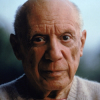
Pablo Picasso
Pablo Ruiz y Picasso, also known as Pablo Picasso, was a Spanish painter, sculptor, printmaker, ceramicist, stage designer, poet and playwright who spent most of his adult life in France. Regarded as one of the greatest and most influential artists of the 20th century, he is known for co-founding the Cubist movement, the invention of constructed sculpture, the co-invention of collage, and for the wide variety of styles that he helped develop and explore. Among his most famous works are...
NationalitySpanish
ProfessionPainter
Date of Birth25 October 1881
CityMalaga, Spain
CountrySpain
The artist is a receptacle for the emotions that come from all over the place: from the sky, from the earth, from a scrap of paper, from a passing shape, from a spider's web.
We all know that Art is not truth. Art is a lie that makes us realize the truth, at least the truth that is given to us to understand.
What do you think an artist is? An imbecile who has only his eyes if he is a painter, or his ears if he is a musician, or a lyre at every level of his heart if he is a poet, or, if he is merely a boxer, only his muscle? On the contrary, he is at the same time a political being, constantly alert to the heartrending, burning, or happy events in the world, molding himself in their likeness.
We all know that Art is not truth. Art is a lie that makes us realize truth, at least the truth that is given us to understand. The artist must know the manner whereby to convince others of the truthfulness of his lies.
A painter is a man who paints what he sells; an artist, on the other hand, is a man who sells what he paints.
It's not what the artist does that counts; it's what he is.
Paintings are but research and experiment. I never do a painting as a work of art. All of them are researches. I search constantly and there is a logical sequence in all this research.
The different styles I have been using in my art must not be seen as an evolution, or as steps towards an unknown ideal of painting. Everything I have ever made was made for the present and with the hope that it would always remain in the present.
No doubt, it is useful for an artist to know all the forms of art which have preceded or which accompany his. That is a sign of strength if it is a question of looking for a stimulus or recognizing mistakes he must avoid.
A plagiarist steals from one person. A true artist steals from everybody.
When you begin a picture you often make some pretty discoveries. You must be on guard against these. Destroy the thing, do it over several times. In each destroying of a beautiful discovery, the artist does not really suppress it, but rather condenses it, makes it more substantial. What comes out in the end is the result of discarded finds. Otherwise you become your own connoisseur.
I consider a work of art as a product of calculations, calculations that are frequently unknown to the author himself.
When you start with a portrait and search for a pure form, a clear volume, through successive eliminations, you arrive inevitably at the egg. Likewise, starting with the egg and following the same process in reverse, one finishes with the portrait.
People want Art. And they are given it. But the less Art there is in painting the more painting there is.