Patrick Dixon
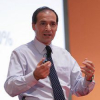
Patrick Dixon
Patrick Dixon is an author and business consultant, often described as a futurist, and chairman of the trends forecasting company Global Change Ltd. He is also founder of the international AIDS agency ACET and Chairman of the ACET International Alliance...
ProfessionEntrepreneur
Date of Birth15 January 1957
powerful speech made
All the most powerful speeches ever made point to a better future.
important events emotion
The future is about emotion: reactions to events are usually far more important than the events themselves.
powerful civilization world
Tribalism is the most powerful force in the world.
keys understanding sustainability
The key to understanding the future is one word: sustainability.
numbers impact risk
The risk of a business being hit by a low probability, high impact event is far higher than most boards realize because the number of potential wild cards is so great.
opportunity numbers trends
To every trend there is a counter-trend. There are a number of pendulums operating and each creates new business opportunities.
work thinking talking
The phrase "work-life balance" tells us that people think that work is the opposite of life. We should be talking about life-life balance.
strong sick healthy
Strong ethics keep corporations healthy . Poor ethics make companies sick. Values are the immune system of every organisation.
Take hold of the future or the future will take hold of you - be futurewise.
passion volunteer soul
Volunteering is a window into the passions of the soul.
believe people purpose
I would rather work with five people who really believe in what they are doing rather than five hundred who can't see the point.
simple price-tag secret
If happiness could be bought, we'd probably be unhappy at the price tag. If only the secret of happiness was as simple as getting wealthy and spending more.
faces six urban
The Six Faces of the FUTURE are: Fast, Urban, Tribal, Universal, Radical and Ethical.
ideas leader innovation
The paradox of innovation is this: CEO's often complain about lack of innovation, while workers often say leaders are hostile to new ideas.