Paul Bettany
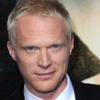
Paul Bettany
Paul Bettanyis an English actor. He first came to the attention of mainstream audiences when he appeared in the British film Gangster No. 1, and director Brian Helgeland's film A Knight's Tale. He has gone on to appear in a wide variety of films, including A Beautiful Mind, Master and Commander: The Far Side of the World, Dogville, Wimbledon, and the adaptation of the novel The Da Vinci Code. He is also known for his voice role as J.A.R.V.I.S. in...
NationalityEnglish
ProfessionMovie Actor
Date of Birth27 May 1971
CityLondon, England
There's something nice about being able to leave your sense of morality at the door when you come to work in the morning and just be cruel to people all day. It's quite fun. In a lot of my scenes I'm on my own and I would turn up for work and there'd be me and a crew and Ron Howard and it felt like a small, intimate, personal, independent movie. But I hear that's not what it's going to be.
Listen. If we can't break the ice, how 'bout we drown it?
Yeah, I love history and I loved it as a kid.
The fact that in America bread lasts so long. You buy bread, and then it's bread forever - it's Forever Bread!
Businessmen lay off human beings from work, businessmen decide to make shirts in Indonesia and use 8-year-old children to do it in order to turn a profit, businessmen make really cold decisions every day. Businessmen run diamond mines. They walk around in the legitimate world. I try to play it more like that.
There's no such thing as "for sure". That's the only sure thing I do know.
When I became a father acting sort of took the place of what I did in my free time and my children became the main focus. I play a lot and my children play. Both my sons - my daughter's still too young really - have surpassed me with their music skills, which is wildly irritating.
I was always waiting for the secret to be handed down to me. Ron Howard asked me what I was waiting for and I went, "Ron, I'm waiting to know the secret. I keep feeling there's some sort of secret that's going to passed on from a director." He went, "Oh no. There is none. You've just got to on and do it and make mistakes and figure it out."
I really like telling stories. When I was a kid, I wanted to write songs. In quite a fundamental, gratifying, childish way, I enjoy the doing of telling a story.
I remember coming on my first set and it being a playground of things I wanted to ask questions about: cameras and lenses and what the lenses do, what's the focus puller doing and how does that work? Why is there less margin for error when there's less light? I was always asking questions and watching directors closely.
You'll still work with some directors where that doesn't happen, and sometimes it's out of necessity because you're in a really complicated, choreographed fight scene and the whole thing is being prevised in a computer, so it's been decided months before, but I think that's sneaking into the way action scenes are shot.
I do feel that scripts get developed now to a point where they're sort of actor-proof. If the actor is not very good, the narrative still survives because it's all in the dialogue. Not to say there aren't great performances in English-language films, because there are every year, but the 1970s were awash with great performances, and I was wondering whether it had to do with the amount of space and the amount of responsibility given to the actors.
Logic doesn't really provide for loyalty. If your logic changes suddenly and things not make sense, you can alter your allegiance, but love stops you from being able to do that.
The only way one can guarantee one's loyalty is love. Loyalty is beyond logic, really.