Paul Davies
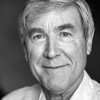
Paul Davies
Paul Charles William Davies, AMis an English physicist, writer and broadcaster, a professor at Arizona State University as well as the Director of BEYOND: Center for Fundamental Concepts in Science. He is affiliated with the Institute for Quantum Studies at Chapman University in California. He has held previous academic appointments at the University of Cambridge, University College London, University of Newcastle upon Tyne, University of Adelaide and Macquarie University. His research interests are in the fields of cosmology, quantum field...
ProfessionNon-Fiction Author
Date of Birth22 April 1946
Science is about explaining the world, and religion is about interpreting it. There shouldn't be any conflict.
Should we find a second form of life right here on our doorstep, we could be confident that life is a truly cosmic phenomenon. If so, there may well be sentient beings somewhere in the galaxy wondering, as do we, if they are not alone in the universe.
I should say we know that there are many, many other Earths out there. We're almost certain that there will be upwards of a billion Earth-like planets in our galaxy alone, so there is no lack of real estate where life might happen, but what we don't know is how likely it is given the real estate, given a wonderful pristine planet like Earth how likely is it that life will pop up inhabited? We don't know the answer to that.
It is hard to resist the impression that the present structure of the universe, apparently so sensitive to minor alterations in numbers, has been rather carefully thought out...The seemingly miraculous concurrence of these numerical values must remain the most compelling evidence for cosmic design.
In science, a healthy skepticism is a professional necessity, whereas in religion, having belief without evidence is regarded as a virtue.
An argument often given for why Earth couldn't host another form of life is that once the life we know became established, it would have eliminated any competition through natural selection. But if another form of life were confined to its own niche, there would be little direct competition with regular life.
What we want is another sample of life, which is not on our tree of life at all. All life that we've studied so far on Earth belongs to the same tree. We share genes with mushrooms and oak trees and fish and bacteria that live in volcanic vents and so on that it's all the same life descended from a common origin. What we want is a second tree of life. We want alien life, alien not necessarily in the sense of having come from space, but alien in the sense of belonging to a different tree altogether. That is what we're looking for, "life 2.0."
Mathematics is universal. It's discovered by human beings, but the rules of mathematics are the same throughout the universe and the laws of the universe.
No attempt to explain the world, either scientifically or theologically, can be considered successful until it accounts for the paradoxical conjunction of the temporal and the atemporal, of being and becoming. And no subject conforms this paradoical conjuction more starkly than the origin of the universe.
In time, [a Martian] colony would grow to the point of being self- sustaining. When this stage was reached, humanity would have a precious insurance policy against catastrophe at home. During the next millennium there is a significant chance that civilization on Earth will be destroyed by an asteroid, a killer plague or a global war. A Martian colony could keep the flame of civilization and culture alive until Earth could be reverse-colonized from Mars.
When I was a student almost nobody thought there was any life beyond Earth. Today it's fashionable to say that there is life all over the place, that the universe is teeming with it, but the scientific facts on the ground haven't really changed.
For millennia mankind has believed that nothing can come out of nothing. Today we can argue that everything has come out of nothing. Nobody has to pay for the universe. It is the ultimate free lunch.
People take it for granted that the physical world is both ordered and intelligible. The underlying order in nature - the laws of physics - are simply accepted as given, as brute facts. Nobody asks where they came from; at least not in polite company. However, even the most atheistic scientist accepts as an act of faith that the universe is not absurd, that there is a rational basis to physical existence manifested as law-like order in nature that is at least partly comprehensible to us. So science can proceed only if the scientist adopts an essentially theological worldview.
The Universe is not a collection of objects, but is an inseparable web of vibrating energy patterns in which no one component has reality independently from the entirety. Included in the entirety is the observer.