Paul Farmer
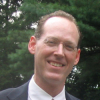
Paul Farmer
Paul Edward Farmeris an American anthropologist and physician who is best known for his humanitarian work providing suitable health care to rural and under-resourced areas in developing countries, beginning in Haiti. Co-founder of an international social justice and health organization, Partners In Health, he is known as "the man who would cure the world," as described in the book, Mountains Beyond Mountains by Tracy Kidder...
NationalityAmerican
ProfessionScientist
Date of Birth26 October 1959
CountryUnited States of America
Well, we've worked with our friends in Haiti to establish nothing short of a modern medical center in one of the poorest parts of that country.
I've been working in Haiti 28 years - I thought I'd sort of seen it... I've gone through a number of coups, the storms of 2008, I thought, you know, that I'd seen things as bad as they were going to get, and I was wrong.
It would be great if people would acknowledge that the state of Haiti was because of the resources we took away.
I think that looking forward it's easy to imagine more constructive help for Haiti.
At the same time, it is obvious that clinicians in Haiti are faced with different, and, in fact, greater, challenges when attempting to treat complications of HIV disease.
Some people talk about Haiti as being the graveyard of development projects.
I can't think of a better model for Haiti rebuilding than Rwanda.
The biggest public health challenge is rebuilding health systems. In other words, if you look at cholera or maternal mortality or tuberculosis in Haiti, they're major problems in Haiti, but the biggest problem is rebuilding systems.
The idea that because you're born in Haiti you could die having a child. The idea that because you're born in you know Malawi your children may go to bed hungry. We want to take some of the chance out of that.
It was apparent from the early 80s that in order to do something lasting and significant in Haiti we would need a springboard in the States.
It is one of our more stable cities in terms of a population that has stayed, ... It's not a city where people leave in large percentages or arrive in large percentages, except as tourists. So I think you're going to see a very strong impulse among the people there to rebuild.
We have opened a hospital that was abandoned since the genocide 10 years ago and put some hundreds of patients on anti-retroviral therapy, for example, in the middle of rural Africa. We have also, needless to say, focused on whatever it is that ails the people who are coming to this hospital and the clinic sites around. And, that is everything from distress during labor, to malaria, of course to other projects. We do not have any doubt that this project will be a great success.
I mean we grew up in a TB bus and I became a TB doctor.
One of the things we have to acknowledge is that if you look at Haiti, many billions of dollars have gone into development aid there that have not been effective.