Paul Goodman
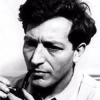
Paul Goodman
Paul Goodmanwas an American novelist, playwright, poet, literary critic, and psychotherapist, although now best known as a social critic and anarchist philosopher. Though often thought of as a sociologist, he vehemently denied being one in a presentation in the Experimental College at San Francisco State in 1964, and in fact said he could not read sociology because it was too often lifeless. The author of dozens of books including Growing Up Absurd and The Community of Scholars, Goodman was an...
NationalityAmerican
ProfessionPhilosopher
Date of Birth9 September 1911
CountryUnited States of America
To consider powerful souls as if they were a useful public resource is quite foreign to our customs. In a small sense it is undemocratic, for it assumes that some people really know better in a way that must seem arbitrary to most. In a large sense it is certainly democratic, in that it makes the great man serve as a man.
Let me formulate the artistic disposition as follows: it is reacting with one's ideal to the flaw in oneself and in the world, and somehow making that reaction formation solid enough in the medium so that it indeed becomes an improved bit of real world for others.
In a milieu of resignation, where the young men think of society as a closed room in which there are no values but the rejected rat race, ... it is extremely hard to aim at objective truth or world culture. One's own products are likely to be personal or parochial.
American society has tried so hard and so ably to defend the practice and theory of production for profit and not primarily for use that now it has succeeded in making its jobs and products profitable and useless.
In the modern world, we Americans are the old inhabitants. We first had political freedom, high industrial production, an economy of abundance.
When a village ceases to be a community, it becomes oppressive in its narrow conformity. So one becomes an individual and migrates to the city. There, finding others like-minded, one re-establishes a village community. Nowadays only New Yorkers are yokels.
Few great men could pass personal.
The issue is not whether people are 'good enough' for a particular type of society; rather it is a matter of developing the kind of social institutions that are most conducive to expanding the potentialities we have for intelligence, grace, sociability and freedom.
For mankind, speech with a capital S is especially meaningful and committing, more than the content communicated. The outcry of the newborn and the sound of the bells are fraught with mystery more than the baby's woeful face or the venerable tower.
The important thing about travel in foreign lands is that it breaks the speech habits and makes you blab less, and breaks the habitual space-feeling because of different village plans and different landscapes. It is less important that there are different mores, for you counteract these with your own reaction-formations.
Humankind is innocent, loving, and creative, you dig? It's the bureaucracies that create the evil, that make Honor and Community impossible, and it's the kids who really take it in the groin.
It takes application, a fine sense of value, and a powerful community-spirit for a people to have serious leisure, and this has not been the genius of the Americans.
There is such a thing as food and such a thing as poison. But the damage done by those who pass off poison as food is far less than that done by those who generation after generation convince people that food is poison.
A good teacher feels his way, looking for response.