Paul Klee
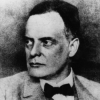
Paul Klee
Paul Kleewas a Swiss-German artist. His highly individual style was influenced by movements in art that included Expressionism, Cubism, and Surrealism. Klee was a natural draftsman who experimented with and eventually deeply explored color theory, writing about it extensively; his lectures Writings on Form and Design Theory, published in English as the Paul Klee Notebooks, are held to be as important for modern art as Leonardo da Vinci's A Treatise on Painting for the Renaissance. He and his colleague, Russian...
NationalitySwiss
ProfessionPainter
Date of Birth18 December 1879
CityMunchenbuchsee, Switzerland
CountrySwitzerland
It is interesting to observe how real the object remains, in spite of all abstractions.
My hand has become the obedient instrument of a remote will.
It is possible that a picture will move far away from Nature and yet find its way back to reality. The faculty of memory, experience at a distance produces pictorial associations.
There is no substitute for intuition.
The longer a line, the more of the time element it contains. Distance is time whereas a surface is apprehended more in terms of the moment.
He has found his style, when he cannot do otherwise.
Art makes something a lot more visible or audible.
Nothing can be rushed. It must grow, it should grow of itself, and if the time ever comes for that work, then so much the better!
We construct and keep on constructing, yet intuition is still a good thing.
Everything passes, and what remains of former times, what remains of life, is the spiritual. In everything we do, the claim of the Absolute is unchanging.
Everything vanishes around me, and works are born as if out of the void. Ripe, graphic fruits fall off. My hand has become the obedient instrument of a remote will.
You adapt yourself to the contents of the paintbox.
The artist of today is more than an improved camera, he is more complex, richer, and wider. He is a creature on the earth and a creature within the whole, that is, a creature on a star among stars.
Children also have artistic ability, and there is wisdom in there having it! The more helpless they are, the more instructive are the examples they furnish us; and they must be preserved free of corruption from an early age.