Paul Kurtz
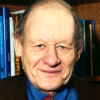
Paul Kurtz
Paul Kurtzwas a prominent American skeptic and secular humanist. He has been called "the father of secular humanism". He was Professor Emeritus of Philosophy at the State University of New York at Buffalo, having previously also taught at Vassar, Trinity, and Union colleges, and the New School for Social Research...
consumers corporate database exposing home major personal potential
It was frightening enough for American consumers when major corporate database breaches here at home started exposing the potential vulnerability of their personal information.
good
It was a good day for us. It is pretty encouraging to go on from here.
leaving atheism deceit
The theist can only find meaning by leaving this life for a transcendental world beyond the grave. The human world as he finds it is empty of 'ultimate purpose' and hence meaningless. Theism thus is an attempt to escape from the human condition; it is a pathetic deceit.
other-worlds vision atheism
We need to be skeptical of utopianists who offer unreliable totalistic visions of other worlds and strive to take us there. We need some ideals, but we also need to protect ourselves from the miscalculations and misadventures of visionaries.
intelligent government people
We have never denied that it is possible, indeed probable, that other forms of life, even intelligent life, exist in the universe. But this is different from the belief that we are now being visited by extraterrestrial beings in spacecraft, that they are abducting people, and the there is a vast government cover-up.
religious principles silent
We cannot remain silent when someone of the Pope's stature and credibility confuses religious principles for science
would-be virtue claims
No one is infallible, and no one can claim a monopoly on truth or virtue. It would be contradictory for skepticism to seek to translate itself into a new faith.
religion atheism
No diety will save us; we must save ourselves.
ignorance caring keys
Three key humanist virtues are courage, cognition, and caring - not dependence, ignorance, or insensitivity to the needs of others.
religious philosophy roots
In contemporary society secular humanism has been singled out by critics and proponents alike as a position sharply distinguishable from any religious formulation. Religious fundamentalists in the United States have waged a campaign against secular humanism, claiming that it is a rival "religion" and seeking to root it out from American public life. Secular humanism is avowedly non-religious. It is a eupraxsophy (good practical wisdom), which draws its basic principles and ethical values from science, ethics, and philosophy.
blessed heart adventure
As I see it, creative achievement is the very heart of the human enterprise... The destiny of man, of all men and of each man, is that he is condemned to invent what he will be - condemned if he is fearful but blessed if he welcomes the great adventure. We are responsible in the last analysis, not simply for what we are, but for what we will become; and that is a source of either high excitement or distress.
moral-development creative excellence
Many humanists have argued that happiness involves a combination of hedonism and creative moral development; that an exuberant life fuses excellence and enjoyment, meaning and enrichment, emotion and cognition.
philosophical views afterlife
Secular humanism does not have the essential attributes of a religion: belief in a deity, the wish for some sort of afterlife, sacred dogma or texts, or an absolutist moral creed. Instead, it expresses a philosophical and ethical point of view, and it draws upon the scientific method in formulationg its naturalistic view of the nature.
giving-up believe moving
I believe that a person should take an affirmative outlook. There are always problems in life, old and new, uncertainties, and unexpected contingencies. The optimal way to deal with this is not to give up in despair, but to move ahead using the best intelligence and resources that we have to overcome adversity.