Paul McCartney
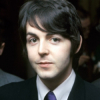
Paul McCartney
Sir James Paul McCartney, MBEis an English singer-songwriter, multi-instrumentalist, and composer. With John Lennon, George Harrison, and Ringo Starr, he gained worldwide fame with the rock band the Beatles, one of the most popular and influential groups in the history of pop music. His songwriting partnership with Lennon is one of the most celebrated of the 20th century. After the band's break-up, he pursued a solo career and formed Wings with his first wife, Linda, and Denny Laine...
NationalityEnglish
ProfessionRock Singer
Date of Birth18 June 1942
CityLiverpool, England
My stepmother sold my birth certificate and someone asked why I didn't buy it back. I don't know, really. I just couldn't bring myself to do it. It was mine. It cost me nothing and suddenly I had to buy it back.
I think that selling rights is a bad move commercially, not just morally. It cheapens the songs. When people come to my concerts, they often hold up candles when we do "Let It Be." I don't think they'd do that anymore if the song suddenly became part of an Oldsmobile ad.
You're always looking at last year, or 10 years ago, or your school days, or your teenage years, your formative years. Because that's exactly what they are, they're your formative years.
A lot of artists use memories. A lot of prose writers, a lot of poets, a lot of songwriters, refer back to something. Generally it's all you've got, unless you're brilliant and can write totally in the now.
It's nice to have a little bit of art to fall back on.
I do have a spongelike ear or mentality or whatever you call it, but it's probably a bit subconscious.
Sometimes you write a song in a certain era and it's got a certain kind of significance.
The most important ingredient to making a song work is the magic. You've got a melody, you've got words, but on the more successful songs, there's a sort of magic glow that just happens and you can feel it happening. It just makes the songs sort of roll out.
I play to all people, and I play to people not governments, and I believe strongly that all people are peaceful and would want peace.
In some ways we live in a world where things appear to be very logical, very rational, and mechanical aspects of our world are rather scientific and rather straightforward.
I've got a few guitars that I like. The trouble with fame and riches is that you have more than one guitar.
I should be able to look at my accolades and go, "Come on, Paul. That's enough." But there's still this little voice in the back of my brain that goes, "No, no, no. You could do better. This person over here is excelling. Try harder!" It still can be a little bit intimidating.
No matter how accomplished or how many awards you get, you're always still thinking there's somebody out there who's better than you.
So many times, I will have people tell me what I did when I was younger. There's so much being written [about] the early Beatles period, and even pre-Beatles period. And people will say, "Oh, he did that because that, and that happened because of that." And I'll be reading and think, "Well, that didn't happen" and, "That's not why I did that." Like anyone's history, you remember what went down better than people who weren't there.