Paul Ricoeur
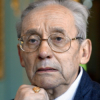
Paul Ricoeur
Jean Paul Gustave Ricœurwas a French philosopher best known for combining phenomenological description with hermeneutics. As such, his thought is within the same tradition as other major hermeneutic phenomenologists, Martin Heidegger and Hans-Georg Gadamer. In 2000, he was awarded the Kyoto Prize in Arts and Philosophy for having "revolutionized the methods of hermeneutic phenomenology, expanding the study of textual interpretation to include the broad yet concrete domains of mythology, biblical exegesis, psychoanalysis, theory of metaphor, and narrative theory."...
NationalityFrench
ProfessionPhilosopher
Date of Birth27 February 1913
CountryFrance
There is no shorter path for joining a neutral existential anthropology, according to philosophy, with the existential decision before God, according to the Bible.
The spectacle is at the same time the mirage of self in the mirror of things.
To put it in a few words, the true malice of man appears only in the state and in the church, as institutions of gathering together, of recapitulation, of totalization.
If you want to change people's obedience then you must change their imagination.
We are not capable of producing a concept of time that is at once cosmological, biological, historical and individual
I find myself only by losing myself.
If it is true that there is always more than one way of construing a text, it is not true that all interpretations are equal.
If the Resurrection is resurrection from the dead, all hope and freedom are in spite of death.
The narrative constructs the identity of the character, what can be called his or her narrative identity, in constructing that of the story told. It is the identity of the story that makes the identity of the character.
The moral law commands us to make the highest possible good in a world the final object of all our conduct.
There was a wise old owl who sat in a tree The less he spoke the more he heard The more he heard the less he spoke Why can't we be like that wise old owl in the tree? Speech must die to serve that which is spoken.
Man is this plural and collective unity in which the unity of destination and the differences of destinies are to be understood through each other
On a cosmic scale, our life is insignificant, yet this brief period when we appear in the world is the time in which all meaningful questions arise.
The Law is one aspect of a much more concrete and encompassing relation than the relation between commanding and obeying that characterizes the imperative.