Paul Watzlawick
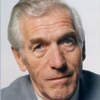
Paul Watzlawick
Paul Watzlawickwas an Austrian-American family therapist, psychologist, communications theorist, and philosopher. A theoretician in communication theory and radical constructivism, he commented in the fields of family therapy and general psychotherapy. Watzlawick believed that people create their own suffering in the very act of trying to fix their emotional problems. He was one of the most influential figures at the Mental Research Institute and lived and worked in Palo Alto, California...
NationalityAustrian
ProfessionPsychologist
Date of Birth25 July 1921
CountryAustria
Paul Watzlawick quotes about
Our everyday, traditional ideas of reality are delusions which we spend substantial parts of our daily lives shoring up, even at the considerable risk of trying to force facts to fit our definition of reality instead of vice versa. And the most dangerous delusion of all is that there is only one reality.
As I have already said, the belief that one's own view of reality is the only reality is the most dangerous or all delusions. It becomes still more dangerous if it is coupled with the missionary zeal to enlighten the rest of the world, whether the rest of the world wishes to be enlightened or not. To refuse to embrace wholeheartedly a particular definition of reality, to dare to see the world differently can become a "think crime" in a truly Orwellian sense as we get steadily closer to 1984.
The belief that one's own view of reality is the only reality is the most dangerous of all delusions.
Usually a person relates to another under the tacit assumption thatthe other shares his view of reality, that indeed there is only onereality....
Radical constructivism, thus, is radical because it breaks with convention and develops a theory of knowledge in which knowledge does not reflect an 'objective' ontological reality.
In other words, what is supposedly found is an invention whose inventor is unaware of his act of invention, who considers it as something that exists independently of him; the invention then becomes the basis of his world view and actions.
Above all, in comedy, and again and again since classical times, passages can be found in which the level of representation is interrupted by references to the spectators or to the fictive nature of the play.
The suicide arrives at the conclusion that what he is seeking does not exist; the seeker concludes that what he has not yet looked in the right place
You cannot not communicate.
For an answer which cannot be expressed the question too cannot be expressed. The riddle does not exist...
The counterpart of the suicide is the seeker; but the difference between them is slight.
It follows from the assumption of a universally valid ideology, just as night follows day, that other positions are heresy.
A self-fulfilling prophecy is an assumption or prediction that, purely as a result of having been made, cause the expected or predicted event to occur and thus confirms its own 'accuracy.'
Frank Farrelly. . .must be thought of with respect (perhaps even delight?) by his clients who have so far played the game of therapy with their therapists, but, I am afraid, also a shocking example for those therapists who, in Laing's words, 'are playing at not playing a game'.