Peter Kropotkin
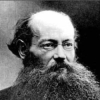
Peter Kropotkin
Prince Pyotr Alexeyevich Kropotkinwas a Russian activist, scientist, and philosopher, who advocated anarchism. Kropotkin was a proponent of a communist society free from central government and based on voluntary associations between workers. He wrote many books, pamphlets and articles, the most prominent being The Conquest of Bread and Fields, Factories and Workshops, and his principal scientific offering, Mutual Aid: A Factor of Evolution. He also contributed the article on anarchism to the Encyclopædia Britannica Eleventh Edition...
NationalityRussian
ProfessionRevolutionary
Date of Birth9 December 1842
CountryRussian Federation
The education we all receive from the State, at school and after, has so warped our minds that the very notion of freedom ends up by being lost, and disguised in servitude. It is a sad sight to see those who believe themselves to be revolutionaries unleashing their hatred on the anarchist just because his views on freedom go beyond their petty and narrow concepts of freedom learned in the State school.
It is only those who do nothing who makes no mistake.
Freedom of the press, freedom of association, the inviolability of domicile, and all the rest of the rights of man are respected so long as no one tries to use them against the privileged class. On the day they are launched against the privileged they are overthrown.
When we have but the will to do it, that very moment will Justice be done: that very instant the tyrants of the Earth shall bite the dust.
Men passionately desire to live after death, but they often pass away without noticing the fact that the memory of a really good person always lives. It is impressed upon the next generation, and is transmitted again to the children. Is that not an immortality worth striving for?
A different conception of society , very different from that which now prevails, is in process of formation. Under the name of Anarchy, a new interpretation of the past and present life of society arises, giving at the same time a forecast as regards its future, both conceived in the same spirit as the above-mentioned interpretation in natural sciences. Anarchy, therefore, appears as a constituent part of the new philosophy, and that is why Anarchists come in contact, on so many points, with the greatest thinkers and poets of the present day.
When we ask for the abolition of the State and its organs we are always told that we dream of a society composed of men better than they are in reality. But no; a thousand times, no. All we ask is that men should not be made worse than they are, by such institutions!
In existing States a fresh law is looked upon as a remedy for evil. Instead of themselves altering what is bad, people begin by demanding a law to alter it.
Think about the world you want to live and work in. What do you need to know to build the world? Demand that your teachers teach you that.
The mutual-aid tendency in man has so remote an origin, and is so deeply interwoven with all the past evolution of the human race, that is has been maintained by mankind up to the present time, notwithstanding all vicissitudes of history.
Have not prisons - which kill all will and force of character in man, which enclose within their walls more vices than are met with on any other spot of the globe - always been universities of crime?
Where there is authority, there is no freedom.
America is just the country that how all the written guarantees in the world for freedom are no protection against tyranny and oppression of the worst kind. There the politician has come to be looked upon as the very scum of society.
Competition is the law of the jungle, but cooperation is the law of civilization