Peter Singer
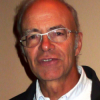
Peter Singer
Peter Albert David Singer, ACis an Australian moral philosopher. He is the Ira W. DeCamp Professor of Bioethics at Princeton University, and a Laureate Professor at the Centre for Applied Philosophy and Public Ethics at the University of Melbourne. He specializes in applied ethics and approaches ethical issues from a secular, utilitarian perspective. He is known in particular for his book, Animal Liberation, a canonical text in animal liberation theory, and his essay Famine, Affluence, and Morality, a key text...
NationalityAustralian
ProfessionPhilosopher
Date of Birth6 July 1946
CountryAustralia
In the real world, 90% of the money spent on medical research is focused on conditions that are responsible for just 10% of the deaths and disability caused by diseases globally.
It was wrong to capture wild animals and confine them in captivity for people to go and gawk at them. And that's basically how zoos got started. But once you do that, and once you have animals that have been bred in captivity, you're really stuck with them in some sense. You can't return them to the wild.
Attempts to defend amusement parks and circuses on the grounds that they 'educate' people about animals should not be taken seriously. Such enterprises are part of the commercial entertainment industry. The most important lesson they teach impressionable young minds is that it is acceptable to keep animals in captivity for human amusement.
All I say about severely disabled babies is that when a life is so miserable it is not worth living, then it is permissible to give it a lethal injection. These are decisions that should be taken by parents - never the state - in consultation with their doctors.
Of all the arguments against voluntary euthanasia, the most influential is the 'slippery slope': once we allow doctors to kill patients, we will not be able to limit the killing to those who want to die.
It's not going to be the individual ... technical (public health) decisions that are going to hold our society together in the face of an immense struggle with an influenza pandemic,
In an ideal world, the amount of money we spend on medical research to prevent or cure a disease would be proportional to its seriousness and the number of people who suffer from it.
I don't eat meat. I've been a vegetarian since 1971. I've gradually become increasingly vegan. I am largely vegan, but I'm a flexible vegan. I don't go to the supermarket and buy non-vegan stuff for myself. But when I'm traveling or going to other people's places, I will be quite happy to eat vegetarian rather than vegan.
To make sustainable progress in reducing extreme poverty will require improvements in both the quantity and quality of aid.
I find it extraordinary that anyone would have an intellectual conversion to Roman Catholicism.
The Internet, like the steam engine, is a technological breakthrough that changed the world.
The price we are willing to pay for safety cannot be infinite. It is distasteful to put a price on human life, but the more we spend on safety, the less we will have for our other goals.
If we ever do find a better system, I'll be happy to call myself an anti-capitalist.
At the descriptive level, certainly, you would expect different cultures to develop different sorts of ethics and obviously they have; that doesn't mean that you can't think of overarching ethical principles you would want people to follow in all kinds of places.