Peter Wright
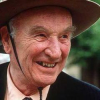
Peter Wright
Peter Maurice Wrightwas the principal scientific officer for MI5, the British counter-intelligence agency, noted for writing the controversial book Spycatcher, which became an international bestseller with sales of over two million copies. Spycatcher was part memoir, part exposé of what Wright claimed were serious institutional failings in MI5 and his subsequent investigations into those. He is said to have been influenced in his counterespionage activity by James Jesus Angleton, the US Central Intelligence Agencycounterintelligence chief from 1954 to 1975...
NationalityBritish
ProfessionScientist
Date of Birth9 August 1916
I've had to do all kinds of jobs to pay the rent. I've even worked in a Cornish tin mine.
I used to paint landscapes without any people in them but now I paint people who happen to be in a particular place. They might be outside a pub, or on a beach or in a studio. They might have clothes on or they might not.
I tried to learn the violin for a while.
Painting is seen as picture making, the making of an art object, something that can stand on its own.
I have to experiment with methods and I'm trying to find an authentic way of making an equivalent of the living, breathing person within the limits of a single picture.
I never know what it's going to look like. Wouldn't be much point in painting if I already knew the outcome. I have a subject in front of me and I start flooding colour and making marks, I don't know, it's improvisation isn't it?
As a kid I quite fancied the romantic, Bohemian idea of being an artist. I expect I thought I could escape from the difficulties of maths and spelling. Maybe I thought I would avoid the judgement of the establishment.
This is a great step forward. They do say they're not giving legal advice, but they are certainly making it easy enough to have access.
It's a team in their infancy. This is a good opportunity for them to get more comfortable playing with each other.
It's my first time playing this tournament in a number of years. I'm going to have a good time with this.
Daniel came through in a high-pressure situation. He did a good job of keeping his focus during the (one-hour) break.
You could always go on changing things but there comes a time when you have to decide to stop.
I think most people see drawing as subservient to the subject, a sort of meditation, a studying, a searching observation, in my case, for its own sake.