Philip Zimbardo
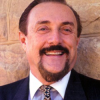
Philip Zimbardo
Philip George Zimbardois a psychologist and a professor emeritus at Stanford University. He became known for his 1971 Stanford prison experiment and has since authored various introductory psychology books, textbooks for college students, and other notable works, including The Lucifer Effect, The Time Paradox and The Time Cure. He is also the founder and president of the Heroic Imagination Project...
NationalityAmerican
ProfessionScientist
Date of Birth23 March 1933
CountryUnited States of America
Philip Zimbardo quotes about
Bullying is an evil because it not only destroys the life of the kid who's bullied, but also makes everyone in the class who knows this is going on feel guilty for not doing anything.
As a result of the prison study, I really became more aware of the central role of power in our lives. I became more aware of the power I have as a teacher. I started consciously doing things to minimize the negative use of power in the classroom. I encouraged students to challenge me.
There was zero time for reflection. We had to feed the prisoners three meals a day, deal with the prisoner breakdowns, deal with their parents, run a parole board. By the third day I was sleeping in my office. I had become the superintendent of the Stanford county jail. That was who I was: I'm not the researcher at all. Even my posture changes--when I walk through the prison yard, I'm walking with my hands behind my back, which I never in my life do, the way generals walk when they're inspecting troops.
Most of us hide behind egocentric biases that generate the illusion that we are special. These self-serving protective shields allow us to believe that each of us is above average on any test of self-integrity. Too often we look to the stars through the thick lens of personal invulnerability when we should also look down to the slippery slope beneath our feet.
For years I've been interested in a fundamental question concerning what I call the psychology of evil: Why is it that good people do evil deeds? I've been interested in that question since I was a little kid. Growing up in the ghetto in the South Bronx, I had lots of friends who I thought were good kids, but for one reason or another they ended up in serious trouble. They went to jail, they took drugs, or they did terrible things to other people. My whole upbringing was focused on trying to understand what could have made them go wrong.
Societal expectations matter little; personal expectations matter tremendously.
I’ve always been curious about the psychology of the person behind the mask...
My early childhood prepared me to be a social psychologist. I grew up in a South Bronx ghetto in a very poor family. From Sicilian origin, I was the first person in my family to complete high school, let alone go to college.
I started studying shyness in adults in 1972. Shyness operates at so many different levels. Out of that research came the Stanford shyness clinic in 1977.
The Devil's strategy for our times is to trivialize human existence and isolate us from one another while creating the delusion that the reasons are time pressures, work demands or economic anxieties.
The most dramatic instances of directed behavior change and "mind control" are not the consequence of exotic forms of influence, such as hypnosis, psychotropic drugs, or "brainwashing," but rather the systematic manipulation of the most mundane aspects of human nature over time in confining settings.
Human behavior is incredibly pliable, plastic.
... In contrast to the "banality of evil," which posits that ordinary people can be responsible for the most despicable acts of cruelty and degradation of their fellows, I posit the "banality of heroism," which unfurls the banner of the heroic Everyman and Everywoman who heed the call to service to humanity when their time comes to act. When that bell rings, they will know that it rings for them. It sounds a call to uphold what is best in human nature that rises above the powerful pressures of Situation and System as the profound assertion of human dignity opposing evil.
After doing psychology for half a century, my passion for all of it is greater than ever.