Philip Zimbardo
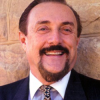
Philip Zimbardo
Philip George Zimbardois a psychologist and a professor emeritus at Stanford University. He became known for his 1971 Stanford prison experiment and has since authored various introductory psychology books, textbooks for college students, and other notable works, including The Lucifer Effect, The Time Paradox and The Time Cure. He is also the founder and president of the Heroic Imagination Project...
NationalityAmerican
ProfessionScientist
Date of Birth23 March 1933
CountryUnited States of America
Philip Zimbardo quotes about
Bullies may be the perpetrators of evil, but it is the evil of passivity of all those who know what is happening and never intervene that perpetuates such abuse.
The world is, was, will always be filled with good and evil, because good and evil is the yin and yang of the human condition.
If you want to change a person, you've got to change the situation.
The "Lucifer Effect" describes the point in time when an ordinary, normal person first crosses the boundary between good and evil to engage in an evil action. It represents a transformation of human character that is significant in its consequences. Such transformations are more likely to occur in novel settings, in "total situations," where social situational forces are sufficiently powerful to overwhelm, or set aside temporally, personal attributes of morality, compassion, or sense of justice and fair play.
Our time is brief, and it will pass no matter what we do. So let us have purpose in spending it. Let us spend it so that our time matters to each of us, and matters to all those whose lives we touch.
Majority decisions tend to be made without engaging the systematic thought and critical thinking skills of the individuals in the group. Given the force of the group's normative power to shape the opinions of the followers who conform without thinking things through, they are often taken at face value. The persistent minority forces the others to process the relevant information more mindfully. Research shows that the deciscions of a group as a whole are more thoughtful and creative when there is minority dissent than when it is absent.
What troubles me is the Internet and the electronic technology revolution. Shyness is fueled in part by so many people spending huge amounts of time alone, isolated on e-mail, in chat rooms, which reduces their face-to-face contact with other people.
Heroes are those who can somehow resist the power of the situation and act out of noble motives, or behave in ways that do not demean others when they easily can.
Heroes are Ordinary People whose social action is Extra-Ordinary/ who ACT when others are passive, who give up EGO-centrism for SOCIO-centrism.
There are times when external circumstances can overwhelm us, and we do things we never thought. If you're not aware that this can happen, you can be seduced by evil. We need inoculations against our own potential for evil. We have to acknowledge it. Then we can change it.
When someone is anonymous, it opens the door to all kinds of antisocial behavior, as seen by the Ku Klux Klan.
I'm saying to be a hero is means you step across the line and are willing to make a sacrifice, so heroes always are making a sacrifice. Heroes always take a risk. Heroes always deviant. Heroes always doing something that most people don't and we want to change - I want to democratise heroism to say any of us can be a hero.
That human behavior is more influenced by things outside of us than inside. The 'situation' is the external environment. The inner environment is genes, moral history, religious training.
Most of the evil of the world comes about not out of evil motives, but somebody saying 'get with the program, be a team player;' this is what we saw at Enron, this is what we saw in the Nixon administration with their scandal.