Philipp Meyer
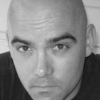
Philipp Meyer
Philipp Meyeris an American fiction writer, and is the author of the novels American Rust and The Son, as well as short stories published in McSweeney’s Quarterly, The Iowa Review, and Esquire UK. Meyer is the recipient of a 2010 Guggenheim Fellowship. He grew up in Hampden, a blue-collar Baltimore, Maryland, neighborhood often featured in the films of John Waters. His mother is an artist; his father is an electrician turned college biology instructor. Meyer considers his major literary influences...
NationalityAmerican
ProfessionWriter
CountryUnited States of America
I like mechanical things; my first book was a mechanics guide - that was what my parents couldn't pry away from me; that was the blanket.
If you've grown up with guns, the thought that someone might take them away makes your stomach churn. They make you feel safe. If you didn't grow up with guns, if you don't know how to use them, then the thought that someone else has them makes your stomach churn.
I couldn't understand what was important about school. Dropping out was the first adult decision I made. If I ever have kids, I would hate for them to drop out. But I wasn't a rebel. I never cared to be against school. I just wanted to do what I wanted to do.
I was a bit of a delinquent growing up, a very poor student - I nearly failed several grades before dropping out of high school and getting a G.E.D. But I still read a lot. Thrillers and war novels, mostly, along with the occasional literary novel from my parents' bookshelf.
My first published novel, 'American Rust,' took three and a half years of full-time work to write. But I wrote two apprentice novels before that.
I should say that generally I'm a pretty happy person, but as soon as I'm done with a project, I'm usually not happy at all. I feel a little empty and strange. I begin to think about how I can get better, stretch more artistically and intellectually. My biggest worry is getting complacent.
I don't think you can be taught how to make art. You can be coached, but on a fundamental level you have to figure it out for yourself. You have to learn how your own mind works, figure out your own relationship to the art; you essentially have to invent it completely for yourself.
Your job as a writer is to find storylines, narrative structures, and characters to show the things that you believe rather than saying them or telling them.
I didn't know much about Texas when I moved there for graduate school. In my first or second semester, I took a class in life and literature of the Southwest, and that's where I first heard about these events along the border in 1915-1918, what Anglos called the Bandit Wars.
When you take the fact that you're loved for granted, it frees your mind to go after every other thing there is.
Fundamentally, all art is about human beings. You're always showing larger moral questions through the smaller moral, philosophical, or political choices through one character in the book.
What art and books do at their best is investigate why we are the way we are.
Whenever I'm interested in something, I make sure I'm really good at it.
Since I quit banking, all my major life decisions, when they could, have revolved around writing.