Pliny the Elder
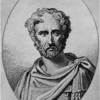
Pliny the Elder
Gaius Plinius Secundus, better known as Pliny the Elder, was a Roman author, naturalist, and natural philosopher, as well as naval and army commander of the early Roman Empire, and personal friend of the emperor Vespasian...
NationalityRoman
ProfessionAuthor
wise men demise
No mortal man, moreover is wise at all moments.
courage grief adversity
Grief has limits, whereas apprehension has none. For we grieve only for what we know has happened, but we fear all that possibly may happen.
country years youth
Our youth and manhood are due to our country, but our declining years are due to ourselves.
book may use
No book so bad but some part may be of use.
flames jewels color
There is in them a softer fire than the ruby, there is the brilliant purple of the amethyst, and the sea green of the emerald - all shining together in incredible union. Some by their splendor rival the colors of the painters, others the flame of burning sulphur or of fire quickened by oil.
men evil granted
A god cannot procure death for himself, even if he wished it, which, so numerous are the evils of life, has been granted to man as our chief good.
certain
This only is certain, that there is nothing certain.
law doctors example
There is alas no law against incompetency; no striking example is made. They learn by our bodily jeopardy and make experiments until the death of the patients, and the doctor is the only person not punished for murder.
men novelty
Man naturally yearns for novelty.
income economy
Let that which is wanting in income be supplied by economy.
names touching peaches
As touching peaches in general, the very name in Latine whereby they are called Persica, doth evidently show that they were brought out of Persia first.
latin littles rodents
When collapse is imminent, the little rodents flee.
chance masters chances-are
Chance is a second master.
wise mind may
As in our lives so also in our studies, it is most becoming and most wise, so to temper gravity with cheerfulness, that the former may not imbue our minds with melancholy, nor the latter degenerate into licentiousness.