Rabindranath Tagore
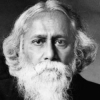
Rabindranath Tagore
Rabindranath Tagore FRAS, also written Ravīndranātha Thākura, sobriquet Gurudev, was a Bengali polymath who reshaped Bengali literature and music, as well as Indian art with Contextual Modernism in the late 19th and early 20th centuries. Author of Gitanjali and its "profoundly sensitive, fresh and beautiful verse", he became the first non-European to win the Nobel Prize in Literature in 1913. In translation his poetry was viewed as spiritual and mercurial; however, his "elegant prose and magical poetry" remain largely unknown...
NationalityIndian
ProfessionPoet
Date of Birth7 May 1861
CityKolkata, India
CountryIndia
If God had so wished, he could have made all Indians speak one language... the unity of India has been and shall always be a unity in diversity.
I have observed, on board a steamer, how men and women easily give way to their instinct for flirtation, because water has the power of washing away our sense of responsibility, and those who on land resemble the oak in their firmness behave like floating seaweed when on the sea.
Joy is there everywhere; it is superfluous, unnecessary; nay, it very often contradicts the most peremptory behests of necessity. It exists to show that the bonds of law can only be explained by love; they are like body and soul. Joy is the realisation of the truth of oneness, the oneness of our soul with the world and of the world-soul with the supreme lover.
Saltwater heals, healing referring to its various forms; tears, cleanses and heals the soul; sweat, cleanses through labor; the ocean, heals in all its forms.
Who are you, a hundred years from today, reading my poetry with curiosity?
Let my thoughts come to you, when I am gone, like the afterglow of sunset at the margin of starry silence.
He alone may chastise who loves.
To be constantly changing one's plans isn't decision at all-it's indecision.
Mistakes live in the neighborhood of truth and therefore delude us.
The spirit of rejection finds its support in the consciousness of separateness; the spirit of acceptance finds its base in the consciousness of unity.
The significance which is in unity is an eternal wonder.
The force of arms only reveals man s weakness.
Work, especially good work, becomes easy only when desire has learned to discipline itself.
False hope is clung to with all one's might and main, till a day comes when it has sucked the heart dry and it forcibly breaks through its bonds and departs. After that comes the misery of awakening, and then once again the longing to get back into the maze of the same mistakes.