Robert Boyle
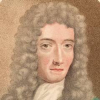
Robert Boyle
Robert William Boyle FRSwas an Anglo-Irish natural philosopher, chemist, physicist and inventor born in Lismore, County Waterford, Ireland. Boyle is largely regarded today as the first modern chemist, and therefore one of the founders of modern chemistry, and one of the pioneers of modern experimental scientific method. He is best known for Boyle's law, which describes the inversely proportional relationship between the absolute pressure and volume of a gas, if the temperature is kept constant within a closed system. Among...
NationalityIrish
ProfessionProduction Designer
Date of Birth10 October 1909
CityLos Angeles, CA
CountryIreland
Darkness, that here surrounds our purblind understanding, will vanish at the dawning of eternal day.
Acid Salts have the Power of Destroying the Blewness of the Infusion of our Wood [lignum nephreticum], and those Liquors indiscriminatly that abound with Sulphurous Salts, (under which I comprehend the Urinous and Volatile Salts of Animal Substances, and the Alcalisate or fixed Salts that are made by Incineration) have the virtue of Restoring it.
In an arch each single stone which, if severed from the rest, would be perhaps defenceless is sufficiently secured by the solidity and entireness of the whole fabric, of which it is a part.
God may rationally be supposed to have framed so great and admirable an automaton as the world for special ends and purposes.
He that condescended so far, and stooped so low, to invite and bring us to heaven, will not refuse us a gracious reception there.
In the Bible the ignorant may learn all requisite knowledge, and the most knowing may learn to discern their ignorance.
I am not ambitious to appear a man of letters: I could be content the world should think I had scarce looked upon any other book than that of nature.
He that said it was not good for man to be alone, placed the celibate amongst the inferior states of perfection.
And, to prevent mistakes, I must advertize you, that I now mean by elements, as those chymists that speak plainest do by their principles, certain primitive or simple, or perfectly unmingled bodies; which not being made of any other bodies, or of one another, are the ingredients of which all those called perfectly mixt bodies are immediately compounded, and into which they are ultimately resolved: now whether there be any such body to be constantly met with in all, and each, of those that are said to be elemented bodies, is the thing I now question.
But the World being once fram'd, and the course of Nature establish'd, the Naturalist, (except in some few cases, where God, or Incorporeal Agents interpose), has recourse to the first Cause but for its general and ordinary Support and Influence, whereby it preserves Matter and Motion from Annihilation or Desition; and in explicating particular phenomena, considers onely the Size, Shape, Motion, (or want of it) Texture, and the resulting Qualities and Attributes of the small particles of Matter.
Exalt your passion by directing and settling it upon an object the due con-templation of whose loveliness may cure perfectly all hurts received from mortal beauty.
The veneration, wherewith Men are imbued for what they call Nature, has been a discouraging impediment to the Empire of Man over the inferior Creatures of God. For many have not only look'd upon it, as an impossible thing to compass, but as something impious to attempt.
The book of nature is a fine and large piece of tapestry rolled up, which we are not able to see all at once, but must be content to wait for the discovery of its beauty, and symmetry, little by little, as it graduallly comes to be more and more unfolded, or displayed.
Nature always looks out for the preservation of the universe.