Robert Fisk
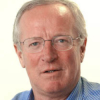
Robert Fisk
Robert Fiskis an English writer and journalist from Maidstone, Kent. He has been Middle East correspondent intermittently since 1976 for various media; since 1989 he is correspondent for The Independent, primarily based in Beirut. Fisk holds more British and international journalism awards than any other foreign correspondent and has been voted British International Journalist of the Year seven times. He has published a number of books and reported on several wars and armed conflicts...
NationalityBritish
ProfessionJournalist
Date of Birth12 July 1946
The Middle East is a land of great injustice. The Israelis can claim - or wish to, at least - that Lord Balfour's Declaration of 1917 promised Britain support for a Jewish homeland in Palestine, which didn't just mean the left-hand bit that became Israel.
In Palestine, the Israelis claim they found a land without people,' a Syrian officer explained to us. 'Now they will take southern Lebanon and claim they have found another land without people if these refugees do not return.
Saudi Arabia is the most fragile of all Arab states, though we're not saying so. And, unfortunately, bin Laden puts his finger on the other longstanding injustices in the Arab world: the continued occupation of Palestinian land by the Israelis; the enormous, constant Arab anger with the tens of thousands of Iraqi children who are dying under sanctions; the feelings of humiliation of millions of Arabs living under petty dictators, almost all of whom are propped up by the West.
After the allied victory of 1918, at the end of my father's war, the victors divided up the lands of their former enemies. In the space of just seventeen months, they created the borders of Northern Ireland, Yugoslavia and most of the Middle East. And I have spent my entire career—in Belfast and Sarajevo, in Beirut and Baghdad—watching the people within those borders burn.
William Dalrymple called me a war junkie in his silly book. No, I don't have a desire for it. I'm appalled and infuriated by it.
The Americans must leave, the Americans will leave and the terrible tragedy is the Americans can't leave because that is the equation that will turn sand into blood.
To look for bin Laden now is as useful as detaining nuclear scientists after the creation of the atomic bomb.
The biggest problem I have in journalism is being quoted or misquoted and then being asked to defend something I haven't said.
When I visited Syrian special forces along the front lines, I was given extraordinary amounts of detail. They gave me the code numbers for the various positions they've got, told me where the rebels were - about 800 meters away in a forest. I met soldiers who had been wounded but were still serving.
I'm not sure whether I've been happy. After my last book tour, I sat on my balcony with a cup of tea. I thought: 'You can't rewind the movie. I've spent more than half my life in the Middle East. There have been great moments of horror and depression and loneliness.'
U.S. journalists I don't think are very courageous. They tend to go along with the government's policy domestically and internationally. To question is seen as being unpatriotic, or potentially subversive.
Bin Laden always wanted to get rid of Mubarek and Ben Ali and Gaddafi and so on, claiming that they were all infidels working for America, and in fact, it was millions of ordinary people who peacefully, more or less - certainly in the case of Tunisia and Egypt - got rid of them.
The Second World War is and was constantly being drudged up by Blair and Bush to rationalize the invasion of Iraq.
One of the reasons why I think people have gone from reading mainstream newspapers to the Internet is because they realize they're being lied to.