Robert Hormats
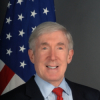
Robert Hormats
Robert D. "Bob" Hormats is Vice Chairman of Kissinger Associates. Immediately prior he served as Under Secretary of State for Economic Growth, Energy, and the Environmentfrom 2009 to 2013. Hormats was formerly Vice Chairman of Goldman Sachs, which he joined in 1982. He served as Senior Deputy Assistant Secretary, from 1977 to 1979, and Assistant Secretary of State, from 1981 to 1982, at the Bureau of Economic and Business Affairs. He was Ambassador and Deputy U.S. Trade Representative from 1979...
NationalityAmerican
ProfessionPublic Servant
Date of Birth13 April 1943
CountryUnited States of America
We've depended very heavily on the inflows of foreign capital. And if for any number of reasons foreigners are reluctant to buy --Treasuries in particular -- that could cause a certain amount of volatility in the market,
We are massively reliant on foreign capital. One of the jobs of the next Fed chairman will be to keep investors confident in the economy.
The refineries are going flat out and additional crude is not going to be able to go through those refineries right away, ... It's a good thing to show to the OPEC countries that we're doing something ourselves to increase supply, but it may not achieve much in the near term.
If it starts to cascade from one country to another, it will reduce the efficiency of the global economy and slow down the pace of activity.
There is a strong, long-term American interest in closer economic, trade and financial relations with China, ... Business Day.
He's got his antennae up all the time.
He is very, very good about getting lots of information from people who actually run companies, who actually make financial and business decisions. ... When he sees them socially, he'll find out what's on their minds. He does that a lot. And people in turn are very discreet and they don't turn around and say he's called them.
He will reach out to a broader range of people to hear their point of view. The worst way to serve the president is to narrow the range of advice he is exposed to.
Booming cities, and the provinces and states in which they are located, are driving forces in economic growth today. Consequently, they constitute the new frontier in America's international economic policy.
We have a conundrum. We have a strong economy, but lots of people feel insecure.
Learning from the American experience, governments around the world have developed national innovation policies and programs to accelerate their economic prosperity and to help their citizens and companies compete globally.
The United States is still an enormous generator of innovation, from which other nations have long benefitted. But we now also have the opportunity to benefit from innovation taking place around the world.
Almost every major company in the world wants to do business with China or is in fact doing business with China and wants to participate in the growth of China. So if the transition goes well, that will reinforce their desire to build up their business relations with China.
Any country that seems to have a slightly overvalued currency gets whacked by speculators. People go after the ones they think will be the weakest.