Roland Barthes
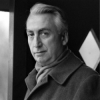
Roland Barthes
Roland Gérard Bartheswas a French literary theorist, philosopher, linguist, critic, and semiotician. Barthes' ideas explored a diverse range of fields and he influenced the development of schools of theory including structuralism, semiotics, social theory, design theory, anthropology and post-structuralism...
NationalityFrench
ProfessionPhilosopher
Date of Birth12 November 1915
CountryFrance
morality steak
To eat steak rare . . . represents both a nature and a morality.
falling-in-love memories desire
Is the scene always visual? It can be aural, the frame can be linguistic: I can fall in love with a sentence spoken to me: and not only because it says something which manages to touch my desire, but because of its syntactical turn (framing), which will inhabit me like a memory.
interviews would-be trouble
The politician being interviewed clearly takes a great deal of trouble to imagine an ending to his sentence: and if he stopped short? His entire policy would be jeopardized!
class keys bourgeoisie
Historically and politically, the petit-bourgeois is the key to the century. The bourgeois and proletariat classes have become abstractions: the petite-bourgeoisie, in contrast, is everywhere, you can see it everywhere, even in the areas of the bourgeois and the proletariat, what's left of them.
simple unity accessories
The unary Photograph has every reason to be banal, 'unity' of composition being the first rule of vulgar (and notably, of academic) rhetoric: 'The subject,' says one handbook for amateur photographers, 'must be simple, free of useless accessories; this is called the Search for Unity.
photography artist practice
Usually the amateur is defined as an immature state of the artist: someone who cannot — or will not — achieve the mastery of a profession. But in the field of photographic practice, it is the amateur, on the contrary, who is the assumption of the professional: for it is he who stands closer to the (i)noeme(i) of Photography.
photography winter secret
The Winter Photograph was my Ariadne, not because it would help me discover a secret thing (monster or treasure), but because it would tell me what constituted that thread which drew me toward Photography. I had understood that henceforth I must interrogate the evidence of Photography, not from the viewpoint of pleasure, but in relation to what we romantically call love and death.
knowledge world mythology
Through the mythology of Einstein, the world blissfully regained the image of knowledge reduced to a formula.
portraits photographer
Great portrait photographers are great mythologists.
photography class two
The Photograph belongs to that class of laminated objects whose two leaves cannot be separated without destroying them both: the windowpane and the landscape, and why not: Good and Evil, desire and its object: dualities we can conceive but not perceive... Whatever it grants to vision and whatever its manner, a photograph is always invisible: it is not it that we see.
photography art past
The realists do not take the photograph for a 'copy' of reality, but for an emanation of past reality, a magic, not an art.
exploration appropriation
Every exploration is an appropriation.
photography social-values age
Each photograph is read as the private appearance of its referent: the age of Photography corresponds precisely to the explosion of the private into the public, or rather into the creation of a new social value, which is the publicity of the private: the private is consumes as such, publicly.
sight doe sugar
The Photograph is violent: not because it shows violent tings, but because on each occasion (i)it fills the sight by force(i), and because in it nothing can be refused or transformed (that we can sometimes call it mild does not contradict its violence: many say that sugar is mild, but to me sugar is violent, and I call it so).