Ronald Coase
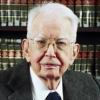
Ronald Coase
Ronald Harry Coasewas a British economist and author. He was for much of his life the Clifton R. Musser Professor Emeritus of Economics at the University of Chicago Law School, where he arrived in 1964 and remained for the rest of his life. After studying with the University of London External Programme in 1927–29, Coase entered the London School of Economics, where he took courses with Arnold Plant. He received the Nobel Prize in Economics in 1991...
NationalityBritish
ProfessionEconomist
Date of Birth29 December 1910
hate data people
I hate when people ask me to: "Massage the data".
entrepreneur cost may
A firm consist of the system of relationships which comes into existence when the direction of resources is dependent on an entrepreneur... As a firm gets larger, there may be decreasing returns to the entrepreneur function, that is, the costs of organizing additional transactions within the firm may rise.
organization alternatives movement
It is clear that these are alternative methods of co-ordinating production. Yet, having regard to the fact that, if production is regulated by price movements, production could be carried on without any organization at all might we ask, why is there any organization?
entrepreneur movement complicated
Outside the firm, price movements direct production, which is co-ordinated through a series of exchange transactions on the market. Within a firm, these market transactions are eliminated and in place of the complicated market structure with exchange transactions is substituted the entrepreneur-co-ordinator, who directs production.
horse looks study
If economists wished to study the horse, they wouldn’t go and look at horses. They’d sit in their studies and say to themselves, ‘What would I do if I were a horse?’
silly may youth
In my youth it was said that what was too silly to be said may be sung. In modern economics it may be put into mathematics.
strong taken ignorance
We must first note that economic factors are taken into account in a world in which ignorance, prejudice, and mental confusion, encouraged rather than dispelled by the political organization, exert a strong influence on policy making.
real air world
Existing economics is a theoretical system which floats in the air and which bears little relation to what happens in the real world.
thinking cost facts
In fact, a large part of what we think of as economic activity is designed to accomplish what high transaction costs would otherwise prevent or to reduce transaction costs so that individuals can negotiate freely and we can take advantage of that diffused knowledge of which Friedrich Hayek has told us.
data voice giving
Data can't speak for itself; it's up to you to give it a voice. Try to speak truthfully.
horse real years
Economics, over the years, has become more and more abstract and divorced from events in the real world. Economists, by and large, do not study the workings of the actual economic system. They theorize about it. As Ely Devons, an English economist, once said in a meeting: 'If economists wanted to study the horse, they wouldn't go around and look at horses. They'd sit in their studies and say to themselves, `What would I do if I were a horse?' '
truth knowledge data
If you torture the data long enough, it will confess.
agriculture regulation study
I can't remember [of a good regulation]. Regulation of transport, regulation of agriculture — agriculture is a, zoning is z. You know, you go from a to z, they are all bad. There were so many studies, and the result was quite universal: The effects were bad
bad cheaper good people producing seen
The pollution problem is always seen as someone who was doing something bad that has to be stopped. To me, pollution is doing something bad and good. People don't pollute because they like polluting. They do it because it's a cheaper way of producing something else.