Roy Lichtenstein
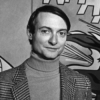
Roy Lichtenstein
Roy Fox Lichtensteinwas an American pop artist. During the 1960s, along with Andy Warhol, Jasper Johns, and James Rosenquist among others, he became a leading figure in the new art movement. His work defined the basic premise of pop art through parody. Favoring the comic strip as his main inspiration, Lichtenstein produced hard-edged, precise compositions that documented while it parodied often in a tongue-in-cheek manner. His work was heavily influenced by both popular advertising and the comic book style. He...
NationalityAmerican
ProfessionPop Artist
Date of Birth27 October 1923
CityNew York City, NY
CountryUnited States of America
Painting stems from a sense of organisation, the sensed positions of contrasts. Not that it is about this.
Color is crucial in painting, but it is very hard to talk about.
There is a relationship between cartooning and people like Mir? and Picasso which may not be understood by the cartoonist, but it definitely is related even in the early Disney.
Im interested in what would normally be considered the worst aspects of commercial art. I think its the tension between what seems to be so rigid and cliched and the fact that art really cant be this way.
Everybody knows that abstract art can be art, and most people know that they may not like it, even if they understand there's another purpose to it.
The things that I have apparently parodied I actually admire,
What interests me is to paint the kind of antisensitivity that impregnates modern civilization. I think art since Cezanne has become extremely romantic and unrealistic, feeding on art. It is Utopian. It has less and less to do with the world. It looks inward - neo-Zen and all that. Pop Art looks out into the world. It doesn't look like a painting of something, it looks like the thing itself.
Use the worst colour you can find in each place - it usually is the best.
I'd always wanted to know the difference between a mark that was art and one that wasn't.
We like to think of industrialization as being despicable. I don't really know what to make of it. There’s something terribly brittle about it. I suppose I would still prefer to sit under a tree with a picnic basket rather than under a gas pump, but signs and comic strips are interesting as subject matter. There are certain things that are usable, forceful, and vital about commercial art. We're using those things – but we're not really advocating stupidity, international teenagerism, and terrorism.
When I met Steve Kaufman, I thought he was Gene Simmons, but what an artist talent he is. He will be an art force in the art world to deal with.
I think that most people think painters are kind of ridiculous, you know?
The big tradition, I think, is unity. And I have that in mind; and with that, you know, you could break all the traditions- all the other so-called rules, because they are stylistic.. and most are not true. As long as the marks are related to one another, there is unity. Unity in the work itself depends on unity of the artist's vision.
I don't think of form as a kind of architecture. The architecture is the result of the forming. It is the kinesthetic and visual sense of position and wholeness that puts the thing into the realm of art.