Sam Abell
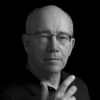
Sam Abell
Sam Abellis an American photographer known for his frequent publication of photographs in National Geographic. He first worked for National Geographic in 1967, and is one of the more overtly artistic photographers among his magazine peers. Sam Abell's style of photography is documentary in the sense that his major avenue, the National Geographic magazine, is a publication of record. However, his best work is known for its transcendent qualities, starting at the documentary level yet open to interpretation on an...
NationalityAmerican
ProfessionPhotographer
CountryUnited States of America
There are a lot of ways to be expressive in life, but I wasn't good at some of them. Music, for instance. I was a distinct failure with the cello. Eventually, my parents sold the cello and bought a vacuum cleaner. The sound in our home improved.
As I have practiced it, photography produces pleasure by simplicity. I see something special and show it to the camera. A picture is produced. The moment is held until someone sees it. Then it is theirs.
There are grander and more sublime landscapes - to me. There are more compelling cultures. But what appeals to me about central Montana is that the combination of landscape and lifestyle is the most compelling I've seen on this earth. Small mountain ranges and open prairie, and different weather, different light, all within a 360-degree view.
Editorial photography has to be energetic and visually competitive.
For sheer majestic geography and sublime scale, nothing beats Alaska and the Yukon. For culture, Japan. And for all-around affection, Australia.
I wanted life to be episodic. I wanted to be a magazine photographer and I was willing to do what it took to become that.
And that desire-the strong desire to take pictures-is important. It borders on a need, based on a habit: the habit of seeing. Whether working or not, photographers are looking, seeing, and thinking about what they see, a habit that is both a pleasure and a problem, for we seldom capture in a single photograph the full expression of what we see and feel. It is the hope that we might express ourselves fully-and the evidence that other photographers have done so-that keep us taking pictures.
I would like to go to Antarctica. That's about all.
'Woman on the Plaza,' with its distinct horizon, snow-like surfaces, wintry wall, stunning sunlight, sharp shadows, and hurrying figure, would become the most biographical of my photographs - an abstract image of the landscape and life of northern Ohio where I grew up and first practiced photography.
A mad, keen photographer needs to get out into the world and work and make mistakes.
Photographs that transcend but do not deny their literal situation appeal to me.
The reason I don't want to say anything about it is it has a strange power to take over the conversation. Just like it's doing with us. I was asked to participate in a documentary about Richard Prince, and be the voice of someone who was appropriated, and I declined. The reason I did is I don't want it to be the subject of the discussion of my work.
Above all, it's hard learning to live with vivid mental images of scenes I cared for and failed to photograph. It is the edgy existence within me of these unmade images that is the only assurance that the best photographs are yet to be made.
How the visual world appears is important to me. I'm always aware of the light. I'm always aware of what I would call the 'deep composition.' Photography in the field is a process of creation, of thought and technique. But ultimately, it's an act of imaginatively seeing from within yourself.