Sam Harris
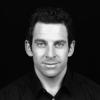
Sam Harris
Samuel Benjamin "Sam" Harrisis an American author, philosopher, and neuroscientist. He is the co-founder and chief executive of Project Reason, a non-profit organization that promotes science and secularism, and host of the podcast Waking Up with Sam Harris. His book The End of Faith, a critique of organized religion, appeared on The New York Times Best Seller list for 33 weeks and also won the PEN/Martha Albrand Award for First Nonfiction in 2005. Letter to a Christian Nationwas a response...
NationalityAmerican
ProfessionStage Actor
Date of Birth4 June 1961
CountryUnited States of America
Tolerance, openness to argument, openness to self-doubt, willingness to see other people's points of view - these are very liberal and enlightened values that people are right to hold, but we can't allow them to delude us to the point where we can't recognise people who are needlessly perpetrating human misery.
On the subject of religious belief, we relax standards of reasonableness and evidence that we rely on in every other area of our lives. We relax so totally that people believe the most ludicrous propositions, and are willing to organize their lives around them.
Most people believe that the Creator of the universe wrote (or dictated) one of their books. Unfortunately, there are many books that pretend to divine authorship, and each makes incompatible claims about how we all must live.
I consistently encounter people in academic settings and scientists and journalists who feel that you can't say that anyone is wrong in any deep sense about morality, or with regard to what they value in life. I think this doubt about the application of science and reason to questions of value is really quite dangerous.
It's not so much religion per se, it's false certainty that worries me, and religion just has more than its fair share of false certainty or dogmatism. I'm really concerned when I see people pretending to know things they clearly cannot know.
My concern with religion is that it allows us by the millions to believe what only lunatics or idiots could believe on their own. That's not to say that all religious people are lunatics or idiots. It's anything but that.
An argument can be logically valid, but unsound in that it contains a false premise and, therefore, leads to a false conclusion (e.g., Scientists are smart; smart people do not make mistakes; therefore, scientists do not make mistakes).
Principle #1: Avoid dangerous people and dangerous places. Principle #2: Do not defend your property. Principle #3: Respond immediately and escape.
This is the true horror of religion. It allows perfectly decent and sane people to believe by the billions, what only lunatics could believe on their own.
Perhaps one day we will do “everything that we can to protect our people and the timeless values that we stand for.” But today, we won’t even honestly describe the motivations of our enemies. And in the act of lying to ourselves, we continue to pay lip service to the very delusions that empower them.
The problem is that religion tends to give people bad reasons to be good.
There must be right and wrong answers to questions of morality and values that potentially fall within the purview of science. On this view, some people and cultures will be right (to a greater or lesser degree), and some will be wrong, with respect to what they deem important in life.
The most transformative experiences people have - bliss, devotion, self transcendence - are currently anchored to the worst parts of culture and to ways of thinking that merely amplify superstition, self-deception, and conflict.
Recently , crowds of thousands gathered throughout the Muslim world - burning European embassies, issuing threats, taking hostages, even killing people - in protest over twelve cartoons depicting the Prophet Muhammad that were first published in a Danish newspaper. When was the last atheist riot?