Samuel Adams
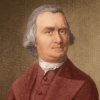
Samuel Adams
Samuel Adamswas an American statesman, political philosopher, and one of the Founding Fathers of the United States. As a politician in colonial Massachusetts, Adams was a leader of the movement that became the American Revolution, and was one of the architects of the principles of American republicanism that shaped the political culture of the United States. He was a second cousin to President John Adams...
NationalityAmerican
ProfessionPolitician
Date of Birth27 September 1722
CityBoston, MA
CountryUnited States of America
Nothing is more essential to the establishment of manners in a State than that all persons employed in places of power and trust must be men of unexceptionable characters.
Before the formation of this Constitution it had been affirmed as a self evident truth, in the Declaration of Independence, very deliberately made by the Representatives of the United States of America in Congress assembled that 'all men are created equal, and are endowed by their Creator with certain unalienable rights' This declaration of Independence was received and ratified by all the States in the Union & has never been disannuled. May we not from hence conclude, that the doctrine of Liberty and Equality is an article in the political creed of the United States.
The sum of all is, if we would most truly enjoy the gift of Heaven, let us become a virtuous people; then shall we both deserve and enjoy it. While on the other hand, if we are universally vicious and debauched in our manners, though the form of our Constitution carries the face of the most exalted freedom, we shall in reality be the most abject slaves.
The necessity of the times, more than ever, calls for our utmost circumspection, deliberation, fortitude, and perseverance.
A general dissolution of principles and manners will more surely overthrow the liberties of America than the whole force of the common enemy. While the people are virtuous they cannot be subdued; but when once they lose their virtue then will be ready to surrender their liberties to the first external or internal invader.
It is therefore recommended... to set apart Thursday the eighteenth day of December next, for solemn thanksgiving and praise, that with one heart and one voice the good people may express the grateful feelings of their hearts and consecrate themselves to the service of their divine benefactor.
If men of wisdom and knowledge, of moderation and temperance, of patience, fortitude and perseverance, of sobriety and true republican simplicity of manners, of zeal for the honour of the Supreme Being and the welfare of the commonwealth; if men possessed of these other excellent qualities are chosen to fill the seats of government, we may expect that our affairs will rest on a solid and permanent foundation.
Our contest is not only whether we ourselves shall be free, but whether there shall be left to mankind an asylum on earth for civil and religious liberty.
What a man has honestly acquired is absolutely his own, which he may freely give, but cannot be taken from him without his consent.
If virtue & knowledge are diffused among the people, they will never be enslav'd. This will be their great security.
The public cannot be too curious concerning the characters of public men.
Principally, and first of all, I resign my soul to the Almighty Being who gave it, and my body I commit to the dust, relying on the merits of Jesus Christ for the pardon of my sins.
In regard to religion, mutual toleration in the different professions thereof is what all good and candid minds in all ages have ever practiced, and both by precept and example inculcated on mankind.
Hence as a private man has a right to say what wages he will give in his private affairs, so has a Community to determine what they will give and grant of their substance for the Administration of public affairs.