Samuel Smiles
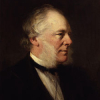
Samuel Smiles
Samuel Smiles, was a Scottish author and government reformer who campaigned on a Chartist platform. But he concluded that more progress would come from new attitudes than from new laws. His masterpiece, Self-Help, promoted thrift and claimed that poverty was caused largely by irresponsible habits, while also attacking materialism and laissez-faire government. It has been called "the bible of mid-Victorian liberalism", and it raised Smiles to celebrity status almost overnight...
NationalityScottish
ProfessionAuthor
Date of Birth23 December 1812
All experiences of life seems to prove that the impediments thrown in the way of the human advancement may for the most part be overcome by steady good conduct, honest zeal, activity, perseverance and above all, by a determined resolution to surmount.
Good sense, disciplined by experience and inspired by goodness, issues in practical wisdom.
Childhood is like a mirror, which reflects in after life the images first presented to it.
A fig-tree looking on a fig-tree becometh fruitful," says the Arabian proverb. And so it is with children; their first great instructor is example.
True politeness is consideration for the opinions of others. It has been said of dogmatism that it is only puppyism come to its full growth; and certainly the worst form this quality can assume is that of opinionativeness and arrogance.
Thus the brave and aspiring life of one man lights a flame in the minds of others of like faculties and impulse; and where there is equally vigorous effort, like distinction and success will almost surely follow. Thus the chain of example is carried down through time in an endless succession of links--admiration exciting imitation, and perpetuating the true aristocracy of genius.
What we are accustomed to decry as great social evils, will, for the most part, be found to be only the out-growth of our own perverted life; and though we may endeavor to cut them down and extirpate them by means of law, they will only spring up again with fresh luxuriance in some other form, unless the conditions of human life and character are radically improved.
The life of a good man is at the same time the most eloquent lesson of virtue and the most severe reproof of vice.
There are many persons of whom it may be said that they have no other possession in the world but their character, and yet they stand as firmly upon it as any crowned king.
It is observed at sea that men are never so much disposed to grumble and mutiny as when least employed. Hence an old captain, when there was nothing else to do, would issue the order to "scour the anchor.
All that is great in man comes through work; and civilization is its product.
Necessity, oftener than facility, has been the mother of invention; and the most prolific school of all has been the school of difficulty.
Fortune has often been blamed for her blindness; but fortune is not so blind as men are. Those who look into practical life will find that fortune is usually on the side of the industrious, as the winds and waves are on the side of the best navigators.
The shortest way to do many things is to do one at a time.