Samuel Taylor Coleridge
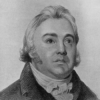
Samuel Taylor Coleridge
Samuel Taylor Coleridgewas an English poet, literary critic and philosopher who, with his friend William Wordsworth, was a founder of the Romantic Movement in England and a member of the Lake Poets. He wrote the poems The Rime of the Ancient Mariner and Kubla Khan, as well as the major prose work Biographia Literaria. His critical work, especially on Shakespeare, was highly influential, and he helped introduce German idealist philosophy to English-speaking culture. Coleridge coined many familiar words and phrases,...
NationalityEnglish
ProfessionPoet
Date of Birth21 October 1772
Samuel Taylor Coleridge quotes about
Our own heart, and not other men's opinions form our true honor.
Not one man in a thousand has either strength of mind or goodness of heart to be an Atheist. I repeat it. Not one man in a thousand has either strength of mind or goodness of heart to be an Atheist.
What is one man's gain is another's loss.
A State, in idea, is the opposite of a Church. A State regards classes, and not individuals; and it estimates classes, not by internal merit, but external accidents, as property, birth, etc. But a church does the reverse of this, and disregards all external accidents, and looks at men as individual persons, allowing no gradations of ranks, but such as greater or less wisdom, learning, and holiness ought to confer. A Church is, therefore, in idea, the only pure democracy.
The myriad-minded man, our, and all men's, Shakespeare, has in this piece presented us with a legitimate farce in exactest consonance with the philosophical principles and character of farce, as distinguished from comedy and from entertainments. A proper farce is mainly distinguished from comedy by the licence allowed, and even required, in the fable, in order to produce strange and laughable situations. The story need not be probable, it is enough that it is possible.
The present system of taking oaths is horrible. It is awfully absurd to make a man invoke God's wrath upon himself, if he speaks false; it is, in my judgment, a sin to do so.
Man is distinguished from the brute animals in proportion as thought prevails over sense: but in the healthy processes of the mind, a balance is constantly maintained between the impressions from outward objects and the inward operations of the intellect:--for if there be an overbalance in the contemplative faculty, man thereby becomes the creature of mere meditation, and loses his natural power of action.
Be not merely a man of letters! Let literature be an honorable augmentations to your arms, not constitute the coat or fill the escutcheon!
If a man is not rising upwards to be an angel, depend upon it, he is sinking downwards to be a devil . He cannot stop at the beast. The most savage of men are not beasts; they are worse, a great deal worse.
The Reformation in the sixteenth century narrowed Reform. As soon as men began to call themselves names, all hope of further amendment was lost.
Bells, the poor man's only music.
Indignation at literary wrongs I leave to men born under happier stars. I cannot afford it.
The poet, described in ideal perfection, brings the whole soul of man into activity, with the subordination of its faculties to each other according to their relative worth and dignity. He diffuses a tone and spirit of unity, that blends, and (as it were) fuses , each into each, by that synthetic and magical power, to which I would exclusively appropriate the name of Imagination.
The man hath penance done, And penance more will do.