Sandra Cisneros
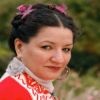
Sandra Cisneros
Sandra Cisnerosis an American writer best known for her acclaimed first novel The House on Mango Streetand her subsequent short story collection Woman Hollering Creek and Other Stories. Her work experiments with literary forms and investigates emerging subject positions, which Cisneros herself attributes to growing up in a context of cultural hybridity and economic inequality that endowed her with unique stories to tell. She is the recipient of numerous awards including a National Endowment for the Arts Fellowship, and is...
NationalityAmerican
ProfessionNovelist
Date of Birth20 December 1954
CityChicago, IL
CountryUnited States of America
I think people should read fairy tales, because were hungry for a mythology that will speak to our fears.
You don't have to be the specialist on everything. You can try to inform yourself.
The only reason we write - well, the only reason why I write; maybe I shouldn't generalize - is so that I can find out something about myself. Writers have this narcissistic obsession about how we got to be who we are. I have to understand my ancestors - my father, his mother and her mother - to understand who I am. It all leads back to the narcissistic pleasure of discovering yourself.
I was silent as a child, and silenced as a young woman; I am taking my lumps and bumps for being a big mouth, now, but usually from those whose opinion I don't respect.
How can art make a difference in the world?
I realize that it's like spices in the kitchen. I need that turmeric. I'm sorry, but cinnamon isn't going to substitute . I feel that I can teach my listener about a new word they can use too. "Well, what words are part of my own community, even if I'm monolingual, that I'm not allowing myself to use in a public sphere?"
Well, when you're an immigrant writer, or an immigrant, you're not always welcome to this country unless you're the right immigrant. If you have a Mexican accent, people look at you like, you know, where do you come from and why don't you go back to where you came from? So, even though I was born in the United States, I never felt at home in the United States. I never felt at home until I moved to the Southwest, where, you know, there's a mix of my culture with the U.S. culture, and that was why I lived in Texas for 25 years.
I usually say Latina, Mexican-American or American Mexican, and in certain contexts, Chicana, depending on whether my audience understands the term or not.
My feminism is humanism, with the weakest being those who I represent, and that includes many beings and life forms, including some men.
You know, you want to be outrageous when you're young, so all the young people say, "Oooh . . ." Now my tactics are different.
Write about what makes you different.
There are many Latino writers as talented as I am, but because we are published through small presses, our books don't count. We are still the illegal aliens of the literary world.
Every book changes my writing because I'm always trying to do something I didn't do before. I try to do what's hard for me, what I haven't done in the past.
Perhaps the greatest challenge has been trying to keep my time to myself and my private life private in order to do my job. Everything that is most mine belongs to everyone now.