Sandra Cisneros
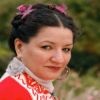
Sandra Cisneros
Sandra Cisnerosis an American writer best known for her acclaimed first novel The House on Mango Streetand her subsequent short story collection Woman Hollering Creek and Other Stories. Her work experiments with literary forms and investigates emerging subject positions, which Cisneros herself attributes to growing up in a context of cultural hybridity and economic inequality that endowed her with unique stories to tell. She is the recipient of numerous awards including a National Endowment for the Arts Fellowship, and is...
NationalityAmerican
ProfessionNovelist
Date of Birth20 December 1954
CityChicago, IL
CountryUnited States of America
People know when you're speaking from el corazón. You have that pain. Take that pain and do something with it. That's very powerful.
My weapon has always been language, and I've always used it, but it has changed. Instead of shaping the words like knives now, I think they're flowers, or bridges.
We started an organization that's the only sub-organization of the MacArthur Foundation and we are called the Macarturos.Usually when I win something, I'm the only one of my ethnicity to get it, but this time I met all these Latinos, and I was so excited. I'd meet someone and I'd go, "Can you come to San Antonio?" And they'd go, "Oh yeah." And suddenly I had twelve people that said they would come. And I didn't know how it was going to be. And that's how the Macarturos became a reality, where these very generous geniuses come to San Antonio and work together.
The beauty of literature is you allow readers to see things through other peoples eyes. All good books do this.
You can't erase what you know. You can't forget who you are.
I am obsessed with becoming a woman comfortable in her skin.
Even though it's hard to believe, but people who know me really well know I'm shy. I have to go past that fear.
'Hispanic' is English for a person of Latino origin who wants to be accepted by the white status quo. 'Latino' is the word we have always used for ourselves.
Books are medicine and you have to take the right medicine that you need at that moment or that day or that time in your life.
It takes a long time for women to feel it's alright to be chingona. To aspire to be a chingona!...You are saying, 'This is my camino, this is my path and I'm gonna follow it, regardless of what culture says.' I don't think the church likes chingonas. I don't think the state likes chingonas.! And fathers definitely do not like chingonas. And boyfriends don't like chingonas. But, you know, I remain optimistic. I will meet a man who likes a chingona, one day. One day, my chingon will come.
If you just breathe, and go slower, you will have enough energy. It's really important because there are people who wait in line, and your work has changed their lives. You will need to listen to them because they are also going to feed you and give you confirmation of the prayer you asked before you spoke.
If you know two cultures and two languages, that intermediate place, where the two don't perfectly meet, is really interesting.
We need to write because so many of our stories are not being heard. Where could they be heard in this era of fear and media monopolies? Writing allows us to transform what has happened to us and to fight back against what's hurting us. While not everyone is an author, everyone is a writer and I think that the process of writing is deeply spiritual and liberatory.
I've put up with too much, too long, and now I'm just too intelligent, too powerful, too beautiful, too sure of who I am finally to deserve anything less.