Saul Bellow
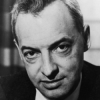
Saul Bellow
Saul Bellowwas a Canadian-American writer. For his literary work, Bellow was awarded the Pulitzer Prize, the Nobel Prize for Literature, and the National Medal of Arts. He is the only writer to win the National Book Award for Fiction three times and he received the National Book Foundation's lifetime Medal for Distinguished Contribution to American Letters in 1990...
NationalityAmerican
ProfessionNovelist
Date of Birth10 June 1915
CityLachine, Canada
CountryUnited States of America
The secret motive of the absent-minded is to be innocent while guilty. Absent-mindedness is spurious innocence.
Language is a spiritual mansion in which you live and nobody has the right to evict you.
It is sometimes necessary to repeat what all know. All mapmakers should place the Mississippi in the same location and avoid originality.
When the striving ceases, there is life waiting as a gift.
Imagination is a force of nature.
Socrates said the unexamined life is not worth living. But the over-examined life makes you wish you were dead. Given the alternative, I'd rather be living.
Fun comes hard - like, alas, its prarens, pleasure and happiness, whom we have to pursue.
You're all alone when you're a writer. Sometimes you just feel you need a humanity bath. Even a ride on the subway will do that. But it's much more interesting to talk about books. After all, that's what life used to be for writers: they talk books, politics, history, America. Nothing has replaced that.
I am more stupid about some things than others; not equally stupid in all directions; I am not a well-rounded person.
Death is the black backing on the mirror that allows us to see anything at all.
I am an American – Chicago born.
And what about all the good I have in my heart - does it mean anything?
It seems hard for the American people to believe that anything could be more exciting than the times themselves. What we read daily and view on the TV has thrust imagined forms into the shadow. We are staggeringly rich in facts, in things, and perhaps, like the nouveau riche of other ages, we want our wealth faithfully reproduced by the artist.
It's hard for writers to get on with their work if they are convinced that they owe a concrete debt to experience and cannot allow themselves the privilege of ranging freely through social classes and professional specialties. A certain pride in their own experience, perhaps a sense of the property rights of others in their experience, holds them back.