Scott Stossel
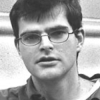
Scott Stossel
Scott Hanford Stossel is an American journalist and editor. He is the editor of The Atlantic magazine, and previously served as executive editor of The American Prospect magazine. He is a graduate of Harvard University. He is the son of Anne Hanford and Dr. Thomas P. Stossel, the brother of cartoonist Sage Stossel, and the nephew of TV journalist John Stossel. In 2014, Stossel was awarded the Erikson Institute Prize for Excellence in Mental Health Media...
NationalityAmerican
ProfessionJournalist
Date of Birth7 August 1969
CountryUnited States of America
I wanted to put a human face on anxiety disorders. I thought people who suffer from anxiety might recognize themselves and gain some comfort from my story and for those who don't suffer from anxiety disorders gain some understanding.
I don't want to be in a position that could make me vomit, like air travel. I've purloined airsick bags and stuffed them everywhere, just in case I ever feel the need to throw up. I haven't vomited since 1977, but I think about it all the time. I recognize that it's irrational, but I'd rather jump out of a window than vomit.
When I was 5 and my sister was 3, we went on a family trip, and she ate cheese off the floor at an airport. My mother, a germaphobe, got very upset. My sister, of course, got a stomach virus, and ever since then, I have an aversion to cheese.
I've always been interested in intellectual history and in psychology, and anxiety is obviously something that's been a big part of my life.
I had no trouble with strangers finding out about my anxiety. It was my friends and colleagues I was concerned about.
As recently as 1979, neither panic attacks nor panic disorder officially existed.
An astonishing portion of my life is built around trying to evade vomiting and preparing for the eventuality that I might.
My parents were not perfect, but no one's parents are. As childhoods go, mine was pretty comfortable and good in a lot of ways, and yet I still ended up with anxiety.
During first grade, I spent nearly every afternoon for months in the school nurse's office, sick with psychosomatic headaches, begging to go home; by third grade, stomachaches had replaced the headaches, but my daily trudge to the infirmary remained the same.
Barbra Streisand developed overwhelming performance anxiety at the height of her career; for 27 years she refused to perform for the general public, appearing live only in private clubs and at charity events, where she presumably believed the pressure on her was less intense.
To grapple with and understand anxiety is, in some sense, to grapple with and understand the human condition.
There's a book that's critical to understanding anxiety, a 17th-century book, 'The Anatomy of Melancholy,' by Robert Burton. I wanted to write something like that.
People who suffer from anxiety are very good at hiding it. That can often be a contributor to the anxiety because the gap between the internal perception and the external impression can feel so large.
All the textbooks talk about avoidance as a classic hallmark of anxiety disorder. So you need a therapist who is sympathetic and understanding but will also push you to do precisely the things that scare you.