Sheldon Lee Glashow
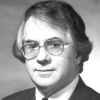
Sheldon Lee Glashow
Sheldon Lee Glashowis a Nobel Prize winning American theoretical physicist. He is the Metcalf Professor of Mathematics and Physics at Boston University and Higgins Professor of Physics, Emeritus, at Harvard University, and is a member of the Board of Sponsors for the Bulletin of the Atomic Scientists...
NationalityAmerican
ProfessionPhysicist
Date of Birth5 December 1932
CountryUnited States of America
history originated problem promising rather string technique theory understand wonderful
String theory has had a long and wonderful history. It originated as a technique to try to understand the strong force. It was a calculational mechanism, a way of approaching a mathematical problem that was too difficult, and it was a promising way, but it was only a technique. It was a mathematical technique rather than a theory in itself.
attend concerned course general lectures string terribly theorists
There are physicists, and there are string theorists. Of course the string theorists are physicists, but the string theorists in general will not attend lectures on experimental physics. They will not be terribly concerned about the results of experiments. They will talk to one another.
failure gauge less period reasons several theory
I had more or less abandoned the idea of an electroweak gauge theory during the period 1961-1970. Of the several reasons for this, one was the failure of my naive foray into renormalizability.
cannot heads recognise scientists
Individual scientists cannot do much on their own. Heads of nations, corporates, and economic giants should recognise the criticality of it.
advent aura average idealistic nuclear replaced research saw science scientific solved weapons
In the 1950s, the average person saw science as something that solved problems. With the advent of nuclear weapons and pollution, the idealistic aura around scientific research has been replaced by cynicism.
adult chemistry concerned good role small
Chemistry is good for fun - it's like baseball. It has its role for small children, but I can't see an adult being concerned with it.
came charmed existence found harvard john predicted research
In 1969, John Iliopoulos and Luciano Maiani came to Harvard as research fellows. Together, we found the arguments that predicted the existence of charmed hadrons.
began clearly coherent elementary particles separate separately taught theory weak
In 1956, when I began doing theoretical physics, the study of elementary particles was like a patchwork quilt. Electrodynamics, weak interactions, and strong interactions were clearly separate disciplines, separately taught and separately studied. There was no coherent theory that described them all.
mean evil magic
We called the new [fourth] quark the "charmed quark" because we were pleased, and fascinated by the symmetry it brought to the subnuclear world. "Charm" also means a "a magical device to avert evil," and in 1970 it was realized that the old three quark theory ran into very serious problems. ... As if by magic the existence of the charmed quark would [solve those problems].
together research physics
Tapestries are made by many artisans working together. The contributions of separate workers cannot be discerned in the completed work, and the loose and false threads have been covered over. So it is in our picture of particle physics.
biologists natural physicists scientists seeking types understanding various
I think that we scientists are seeking an understanding of the natural world. We come in various types - chemists and physicists and biologists and such - and we all have the same goal. We are making progress.
age bombs children committed countries interested physics war
I think that I got committed to physics at the age of - oh, it must have been 1942 - ten, when most countries were at war and children were interested in airplanes and bombs and such things.
It's a wonderful honor to win an Ignobel Prize.
came dozen ear early elementary graduate harvard particle school students thesis time university
I came to graduate school at Harvard University in 1954. My thesis supervisor, Julian Schwinger, had about a dozen doctoral students at a time. Getting his ear was as difficult as it was rewarding. I called my thesis 'The Vector Meson in Elementary Particle Decays', and it showed an early commitment to an electroweak synthesis.