Sigmund Freud
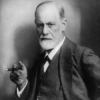
Sigmund Freud
Sigmund Freudwas an Austrian neurologist and the founder of psychoanalysis, a clinical method for treating psychopathology through dialogue between a patient and a psychoanalyst. Freud was born to Galician Jewish parents in the Moravian town of Freiberg, in the Austro-Hungarian Empire. He qualified as a doctor of medicine in 1881 at the University of Vienna. Upon completing his habilitation in 1885, he was appointed a docent in neuropathology and became an affiliated professor in 1902. Freud lived and worked in...
NationalityAustrian
ProfessionScientist
Date of Birth6 May 1856
CityPribor, Czech Republic
CountryAustria
Conscience is the internal perception of the reaction of a particular wish operating within us
I have yet not been able to answer the great question that has never been answered. 'What does a woman want?
It seems to be my fate to discover only the obvious: that children have sexual feelings, which every nurse maid knows; and that the night dreams are just as much a wish fulfillment as day dreams.
The first human being who hurled an insult instead of a stone was the founder of civilization.
the first man to use abusive language instead of his fists was the founder of civilization.
...the first man to use abusive language instead of his fists was the founder of civilization.
The history of the world which is still taught to our children is essentially a series of race murders
A great part of the pleasure of travel lies in the fulfillment of early wishes to escape the family and especially the father
And in the development of mankind as a whole, just as in individuals, love alone acts as a civilizing factor in the sense that it brings a change from egoism to altruism.
The interpretation of dreams is the royal road to knowledge of the unconscious activities of the mind.
To be sure, the ancient belief that the dream reveals the future is not entirely devoid of truth. By representing to us a wish as fulfilled the dream certainly leads us into the future; but this future, taken by the dreamer as present, has been formed into the likeness of that past by the indestructible wish.
When the wayfarer whistles in the dark, he may be disavowing his timidity, but he does not see any the more clearly for doing so.
We know less about the sexual life of little girls than of boys. But we need not feel ashamed of this distinction; after all, the sexual life of adult women is a 'dark continent' for psychology.
The pleasure principle long persists, however, as the method of working employed by the sexual instincts, which are so hard to 'educate', and, starting from those instincts, or in the ego itself, it often succeeds in overcoming the reality principle, to the detriment of the organism as a whole.