Sonny Rollins
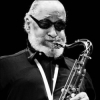
Sonny Rollins
Walter Theodore "Sonny" Rollins is an American jazz tenor saxophonist, widely recognized as one of the most important and influential jazz musicians. In a seven-decade career, he has recorded at least sixty albums as leader and a number of his compositions, including "St. Thomas", "Oleo", "Doxy", "Pent-Up House", and "Airegin", have become jazz standards...
NationalityAmerican
ProfessionSaxophonist
Date of Birth7 September 1930
CityNew York City, NY
CountryUnited States of America
There are a lot of jazz musicians, however, who do have to go to Europe and most of their work is in Europe. That's not true for me.
As the years went by and jazz got more popular and social conditions changed, you were able to have jazz as a topic introduced into the music curriculum in universities, ... I think that one thing that hip-hop and jazz have in common is that they are both coming out of the minority subculture and we've faced some of the same problems. They are attacked in different ways . . . but they are a minority in a majority culture, so they are unfortunately discriminated against by the larger portion of the majority community.
The whole creation of jazz is sort of leading toward the ultimate. I'm not trying to be self-aggrandizing here, but I think that the jazz soloist is the pinnacle of what jazz is about.
I don't think jazz should try to change. I think jazz is varied enough and there is so many different kinds of jazz. So jazz doesn't need to change.
I enjoy playing clubs. I still enjoy the closeness of the nightclub venue. However, after a certain period of time and after playing around some of the clubs in New YorkI felt that jazz should be presented in a more prestigious atmosphere.
Many jazz artists go to L.A. seeking a more comfortable life and then they really stop playing.
I feel that Jazz improvisation is the ultimate. You have to create on the spot, the essence of this music.
I'm not supposed to be playing, the music is supposed to be playing me. I'm just supposed to be standing there with the horn, moving my fingers. The music is supposed to be coming through me; that's when it's really happening.
Jazz never ends... it just continues.
Jazz is the type of music that can absorb so many things and still be jazz.
Music represents nature. Nature represents life. Jazz represents nature. Jazz is life.
Playing in public engenders new paths in your brain that you won't get playing alone. In other words, I can learn something playing in public in five seconds. If I was learning it in private, it might take me three months to get.
We were right on the margins of society. Who really cared about jazz?
I guess fortunate that I'm still around and I emphasize I guess because you never can tell what musicians would be playing had they been around as long as I have.