Stanley Hauerwas
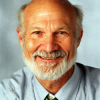
Stanley Hauerwas
Stanley Hauerwasis an American theologian, ethicist, and public intellectual. Hauerwas is a longtime professor at Duke University, serving as the Gilbert T. Rowe Professor of Theological Ethics at Duke Divinity School with a joint appointment at the Duke University School of Law. In the fall of 2014, he also assumed a chair in Theological Ethics at the University of Aberdeen. Before coming to Duke, Hauerwas taught at the University of Notre Dame. Hauerwas is considered by many to be one...
NationalityAmerican
ProfessionTheologian
Date of Birth24 July 1940
CountryUnited States of America
Just as an athlete with natural gifts may fail to develop the fundamental skills necessary to play their sport after their talent fades, so people naturally disposed to faith may fail to develop the skills necessary to sustain them for a lifetime.
The very idea that you could have separation between mosque and state from Islam's perspective is the imposition on them of Christian practice. Islam doesn't really have a place for state. They are a universalistic faith like Christianity, but they think there is no country that bounds Islam.
Protestantism came to America to make America Protestant. It was assumed that was to be done through faith in the reasonableness of the common man and the establishment of a democratic republic.
Conservatives and liberals understand the Christian faith as a set of ideas because, so understood, Christianity seems to be a set of beliefs assessable to anyone upon reflection.
I cannot imagine a more realistic faith than the Christian faith. At every turn, we are told we are death-determined creatures and that our lives, our all too brief lives, at the very least will be complex if not difficult.
The fundamental character of our faith means an extensive diversity is required not only within local community, but between communities.
My way of putting it is that Christians are called to live nonviolently not because we believe nonviolence is a strategy to rid the world of war, but in a world of war as faithful followers of Christ, we cannot imagine being anything other than nonviolent.
It is often observed that the first casualty of war is truth, but how do you tell the truth without betraying the sacrifice of those who accepted the terms of battle? War is a sacrificial system that creates its own justification.
Jesus made the final sacrifice for all, and we need not make it again.
I teach in the Divinity School at Duke University, a very secular university. But before Duke, I taught fourteen years at the University of Notre Dame.
'It is finished' will not be, as we know from the tradition of the ordering of these words from the cross, the last words of Jesus. 'It is finished' is a cry of victory.
I think it is a mistake to focus - as we most often do - only on the sacrifice of life that war requires. War also requires that we sacrifice our normal unwillingness to kill.
William James was not a prophet. He was a philosopher whose philosophy reflected his profound humanity.
My mother desperately wanted children. She had a child that was stillborn - something I learned when I was looking through her 'effects' after she had died. It was then that I discovered my original birth certificate, which indicated the previous birth.