Stefan Zweig
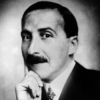
Stefan Zweig
Stefan Zweigwas an Austrian novelist, playwright, journalist and biographer. At the height of his literary career, in the 1920s and 1930s, he was one of the most popular writers in the world...
NationalityAustrian
ProfessionWriter
Date of Birth28 November 1881
CountryAustria
people stupidest
Why is it that the stupidest people are always the most good-natured?
advice events flow generation influence life next offer power
The life of our generation is now set. We do not have the power to influence the flow of events, and no right to offer advice to the next generation.
men servant-of-god servant
It is better to be the servant of God than the ruler of men.
nerves rakes fleeting
Once shame touches your being at any point, even the most distant nerve is implicated, whether you know it or not; any fleeting encounter or random thought will rake up the anguish and add to it.
war blood enemy
It is better to pay tribute of gold to the enemy than tribute of blood in war.
love husband regret
She was at that crucial age when a women begins to regret having stayed faithful to a husband she never really loved, when the glowing sunset colors of her beauty offer her one last, urgent choice between maternal and feminine love. At such a moment a life that seemed to have chosen its course long ago is questioned once again, for the last time the magic compass needle of the will hovers between final resignation and the hope of erotic experience.
strong fear long
Something indefinite is always worse than something definite, a strong fear that doesn't last very long is easier than one that's nebulous but doesn't go away.
real history intellectual
But in the intellectual world, there is room for all opposing forces: even that which never appears victorious in the real world continues to be effective as a dynamic force (in the intellectual world) and precisely the unfulfilled ideals prove to be the most invincible.
happiness past profound
States of profound happiness, like all other forms of intoxication, are apt to befuddle the wits; intense enjoyment of the present always makes one forget the past.
eye blessing people
It is a blessing not yet to have acquired that over-keen, diagnostic, misanthropic eye, and to be able to look at people and things trustfully when one first sees them.
art drama fate
The Battle of Waterloo is a work of art with tension and drama with its unceasing change from hope to fear and back again, changewhich suddenly dissolves into a moment of extreme catastrophe, a model tragedy because the fate of Europe was determined within this individual fate.
passion learning pedants
He who studies without passion will never become anything more than a pedant.
change order essence
Every epoch which seeks renewal first projects its ideal into a human form. In order to comprehend its own essence tangibly, the spirit of the time chooses a human being as its prototype and raising this single individual, often one upon whom it has chanced to come, far beyond his measure, the spirit enthuses itself for its own enthusiasm.
leadership light history
Erasmus was the light of his century; others were its strength: he lighted the way; others knew how to walk on it while he himselfremained in the shadow as the source of light always does. But he who points the way into a new era is no less worthy of veneration than he who is the first to enter it; those who work invisibly have also accomplished a feat.