Swami Vivekananda
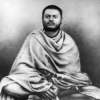
Swami Vivekananda
Swami VivekanandaBengali: , Shāmi Bibekānondo; 12 January 1863 – 4 July 1902), born Narendranath Datta, was an Indian Hindu monk, a chief disciple of the 19th-century Indian mystic Ramakrishna. He was a key figure in the introduction of the Indian philosophies of Vedanta and Yoga to the Western world and is credited with raising interfaith awareness, bringing Hinduism to the status of a major world religion during the late 19th century. He was a major force in the revival of Hinduism in...
NationalityIndian
ProfessionClergyman
Date of Birth12 January 1863
CountryIndia
Cowards only sin, brave men never, no, not even in mind.
The cheerful mind perseveres and the strong mind hews its way through a thousand difficulties.
You know it already that each one of us is the effect of the infinite past; the child is ushered into the world not as something flashing from the hands of nature, as poets delight so much to depict, but he has the burden of an infinite past; for good or evil he comes to work out his own past deeds
I am persuaded that a leader is not made in one life. He has to be born for it. For the difficulty is not in organisation and making plans; the test, the real test, of the leader, lies in holding widely different people together along the line of their common sympathies. And this can only be done unconsciously, never by trying.
I am a Hindu, I am proud to belong to a religion which has taught the world both tolerance and universal acceptance. We believe not only in universal toleration, but we accept all religions as true.
Books are good but they are only maps. Reading a book by direction of a man I read that so many inches of rain fell during the year. Then he told me to take the book and squeeze it between my hands. I did so and not a drop of water came from it. It was the idea only that the book conveyed. So we can get good from books, from the temple, from the church, from anything, so long as it leads us onward and upward.
As soon as extreme attachment comes, a man loses himself, he is no more master of himself, he is a slave.
At the head of all these laws, in and through every particle of matter and force, stands One through whose command the wind blows, the fire burns, the clouds rain, and death stalks upon the earth. And what is His nature? He is everywhere the pure and formless One, the Almighty and the All Merciful. Thou art our Father. Thou art our beloved Friend.
Every idea has to become broad till it covers the whole of this world, every aspiration must go on increasing till it has engulfed the whole of humanity, nay, the whole of life, within its scope.
Spirituality as a science, as a study, is the greatest and healthiest exercise that the human mind can have.
In India the mother is the center of the family and our highest ideal. She is to us the representative of God, as God is the mother of the universe. It was a female sage who first found the unity of God, and laid down this doctrine in one of the first hy mns of the Vedas. Our God is both personal and absolute, the absolute is male, the personal, female. And thus it comes that we now say: 'The first manifestation of God is the hand that rocks the cradle'.
The day, man will find that he never really dies; that his Soul persists beyond death; he will have no more fear of death.
Last of all will come self-surrender. Then we shall be able to give ourselves up to the Mother. If misery comes, welcome; if happiness comes, welcome. Then, when we come up to this love, all crooked things shall be straight. There will be the same sight for the Brahmin, the Pariah, and the dog. Until we love the universe with samesightedness, with impartial, undying love, we are missing again and again. But then all will have vanished, and we shall see in all the same infinite eternal Mother.
Learn to recognise the mother in Evil, Terror, Sorrow, Denial, as well as in Sweetness and in Joy.