Swami Vivekananda
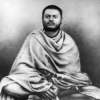
Swami Vivekananda
Swami VivekanandaBengali: , Shāmi Bibekānondo; 12 January 1863 – 4 July 1902), born Narendranath Datta, was an Indian Hindu monk, a chief disciple of the 19th-century Indian mystic Ramakrishna. He was a key figure in the introduction of the Indian philosophies of Vedanta and Yoga to the Western world and is credited with raising interfaith awareness, bringing Hinduism to the status of a major world religion during the late 19th century. He was a major force in the revival of Hinduism in...
NationalityIndian
ProfessionClergyman
Date of Birth12 January 1863
CountryIndia
The calm man is not the man who is dull. You must not mistake Sattva for dullness or laziness. The calm man is the one who has control over the mind waves. Activity is the manifestation of inferior strength, calmness, of the superior.
The apparent man is only a limitation of that Real Man.
Only man makes Karma.
Man the infinite dreamer, dreaming finite dreams!
Man's free agency is not of the mind, for that is bound. There is no freedom there.
Man's experience in the world is to enable him to get out of its whirlpool.
Man will have to go beyond intellect in the end.
Man, therefore, according to the Vedanta philosophy, is the greatest being that is in the universe.
Man makes the mistake of separating himself from God and identifying himself with the body.
Man is the greatest being that ever can be.
Man is the epitome of all things and all knowledge is in him.
Man is the apex of the only world we can ever know.
Man is really free, the real man cannot but be free.
Man is not mind, he is soul.